I started using your springtail products a month ago and it looks like I’m winning the battle. We aren’t seeing any outside on the house siding anymore but inside, we keep finding a few dead every couple of days. How often should I be treating now? I know your article says to retreat if we’re seeing them live but what if they’re dead? We’re using your sprays and sink treatments.
Great question! There is no right or wrong answer here. In some cases when to retreat will have to do with the pest; in other cases it has to do more about where you’re treating. Another big factor is what gives you peace of mind! For many of our customers – especially the ones with springtails, clover mites or other small nagging pests – they feel they can never treat too much so they will continue to treat throughout most of the year – especially if they reside in the southern zone of the U.S.
So lets start with something like treating a tree for tree borers. For this pest, we recommend a surface spray for tree bark and a systemic for soil drenching. And the recommended schedule includes two treatments the first year when addressing an active problem and after that, once a year to keep them all safe and sound.
And for termites? Once every 3-5 years as our TERMITE CONTROL article explains. The long “residual” when treating soil for termites has to do with the actives locking into the dirt and lasting a good long time. Unfortunately, for surface spraying, you’ll never get anything like this residual wise and why for many pests, you need to treat on a more regular basis.
So now lets discuss the recommended schedule for something like ANTS or LARGE ROACHES. Since both of these can be controlled with a “surface spray”, you will be fine treating baseboards and exterior siding every 2-4 weeks with an active problem and after 2 treatments, less frequently will still be effective. This can happen because the foraging pests will pick up some of your treatment and die within 1-2 days. Since they have to come out to find food, they’ll keep exposing themselves to the treatment. This means they’ll keep bringing some back to their nests too which can control all of them (assuming you sprayed thoroughly and used enough of the mixture), and the problem should be gone within 1-2 months. In many cases even faster but a longer time can be needed to insure any egg sacs have hatched. Only then will the “supply” dwindle and effectively run out so no new ones will be seen.
But for small pests like SPRINGTAILS or CLOVER MITES – who live and nest under home siding, roofing, under baseboards, sinks, tubs, showers, behind grouted tiles, in subflooring and in wall voids where they find both shelter and food – expect a more rigorous and robust treatment schedule. In fact many customers need to treat 2-3 times a week to get ahead of the issue initially.
And it’s not just for this pest. Plan on treating 2-3-4 times a week if you have a seasonal invader – something like ASIAN LADY BEETLES, STINKBUGS or some off BEETLE or other BUG.
In general, our sprays work quickly when first applied BUT this quality is lost once it dries. After that it will take several days for pest to die after being exposed and that means if you have a seasonal invader, they will be replacing the ones that die faster so the problem can actually looks worse! To stop that pattern, treat again to get ahead.
Another reason is that you could have “latent pests” living happily out of sight. And they only come out when their numbers get too big OR for reproduction (like springtails). This means if you surface spray and don’t treat the hidden voids where they’re nesting and reproducing, you’ll keep having new ones emerging. And though your recent treatment should kill them as they “come out”, it will take 1-2 days for this to happen. This means its very easy for the migrating population to come out way faster than the affected ones will die. The net effect is that will keep seeing live activity making it seem as though the previous treatment isn’t helping. But it is actually working; its just that it now takes 1-2 days to kill them compared to 1-2 minutes when the spray is wet! So ultimately, if you don’t want to see anything alive or moving around, retreat or better yet, Power Inject.
So then the next typically question customers have is “will it ever be possible to totally eliminate them and not see any?” For sure! But this will only happen when you are able to directly treat their nests by using the POWER INJECTOR. On the outside of the home, these key locations could be under home siding, behind gutters, around windows and doors. And once inside, its usually under baseboards, inside electric outlets, behind light switch covers, around air vents and in some cases, attics.
The Power Injector will allow you to deliver both Maxxthor and Bithor to where they could be nesting and if you reach these key locations, you can “end” any active population for good.

Now when should you retreat after using the Power Injector? Again, up to you. But let’s think a a moment about why you’re using the Power Injector… it’s so that you’re not seeing them anymore. Now lets think about what happens when you directly spray this pest with either Bithor or Maxxthor. Well, it dies in a few minutes. And if you’re using Maxxthor and Base Oil? They will die in 5-10 seconds!
So if you’re Power Injecting and you see pests in this area a day or two later? It means you did not actually directly treat their nests. Does this mean you failed? Maybe. It could be these are about to die OR what is more likely is that you treated very close to their nests but maybe just missed them and so there are some that survived. So should you retreat? Probably.
For us, the ideal application will kill them all and so none should be seen anymore if you were successful in your quest. And for that reason, there is no need to wait. But again, its up to you. In general, seeing some a day or two later does not mean you completely failed – especially if you had a bad infestation. But in general its never a bad time to treat latent (hidden) areas to be sure.
Now what about up high where you can’t Power Inject a liquid?
That’s where you’ll need a dust. So for electric outlets and air vents and attic spaces, XEMPT DUST would be the way to go since its dry and can last a year or longer.

Of course something like Maxxthor or BITHOR sprayed on surfaces will be stopping them from spreading out. But ultimately seeing new ones on a regular basis means there are still hidden nests that are very content staying hidden and only migrating out when their numbers grow large. And so if you want to end this cycle – of seeing new one emerging all the time – you’ll need to keep treating fast enough to get ahead of the ones emerging.
Now some people get frustrated in that they don’t think they’re helping because they’re not treating any “new” places. Well in most cases, it won’t be needed. Especially if you’re finding dead ones OR noticed a big reduction in how many you’ve seen. Remember, seeing dead ones or less activity means you are very close to having solved the issue. And if you are retreating the same areas, the residual strength will build up and reach deeper and deeper so that ultimately any well hidden nests can be controlled. But this process takes time and patience and staying the course.
So in summary, retreating as you want is fine assuming you’re finding some either alive or dead. True, some of our customers are “okay” waiting a bit when finding them dead but most prefer to retreat again so they’re not seeing any. Ultimately re-treating is probably the safest path to follow because if you aren’t seeing any? That means you’ve either knocked out the ones migrating from hidden nests OR, better yet, got them at their nest sites.
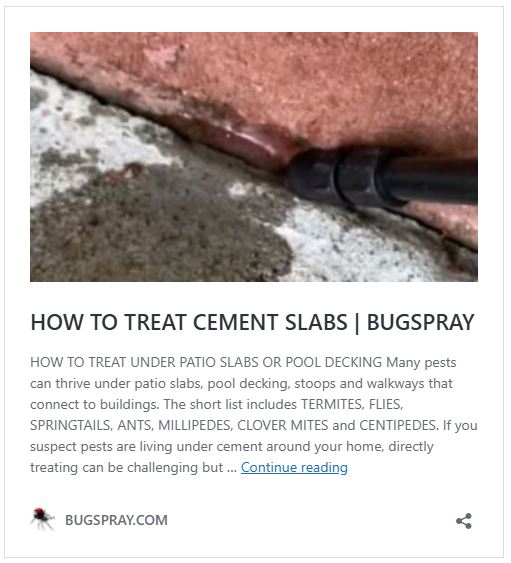
On the other hand, if the ones you’re finding are dead just keep coming longer than a month, it could be that dealing with one of these hidden spaces and will need to get very specific with your treatments, kind of like a surgeon, to knock out the last surviving nests. Oh, and don’t ignore walkways, patios and any solid pieces of stone or rock around the home. Many pests can thrive underneath these ground coverings and so treating UNDER CEMENT can sometimes be required too.
And lastly, for areas like sinks or drains, Enz A Bac will keep them clean meaning you won’t have organic food buildups if you’re apply it once or twice a month all year long so its never a bad idea to keep using it. Lemon Air as well can be used once a week or at least once a month to make sure they don’t come back but in the end, it’s always up to the homeowner and what they are “comfortable” doing. So there is no right or wrong here; preventive maintenance, much like changing the oil in your car, is always smart when it comes to persistent pests like springtails.
In the end, its your decision to make. Just remember that with these small pests like SPRINGTAILS and CLOVERMITES, its usually not possible to “solve” the problem relying on the surface spray treatments alone and even if you do eliminate them inside, treating the homes exterior to keep more from invading is smart.
Patricia Johnston says
Hi, I have Woodworm Beetles at my front door. What do I use to kill them?
Thanks!!!
Tech Support says
Patricia,
So first, can you visit our Wood Borer article and look at the pictures we have to see if this is in fact the beetle you’ve been seeing? Here is the link:
https://bugspray.com/wood-borer-treatment-for-my-cabinet
It’s not common for furniture beetles to randomly land on someone’s front door. Now we’re thinking you meant on the outside of the door so is this right or are you seeing them inside?
Tech Support
Julie Aceituno says
Hi there,
Could you please provide me with the exact measurements to use for the power injector if I want to create a Bitthor surface spray to apply to carpets and inside a dresser? I’m using the power injector mister. How much water should I use, and how much Bitthor?
And then could you do the same for the power injector with Maxxthor and base oil? How much Maxxthor and how much base oil go inside the power injector?
and lastly, the same applies to the garden hose applicator… I have a small area to spray as I rent a townhome, but I have rocks in the back by my driveway leading up to the bricks of my townhouse, and I know lots of sprintails and other things are in there… so how much do I fill up the yard applicator with water and Maxxthor? I don’t want to overuse, but I also don’t want to not put enough to kill them.
Ps. I’m targeting mainly springtails and silverfish… I live in Frisco, Texas, just outside of Dallas, so the humidity is high almost all the time.
Thank you in advance!
Tech Support says
Julie,
So first, we have coverage detailed on this page:
https://bugspray.com/equipment/sprayers/bugspray-power-injector
As you’ll see, you should get about 125 sq/ft of coverage per 16 oz of mixed solution when using the Power Injector with one of the misting nozzles.
Now for the Base Oil with Maxxthor; this will be limited to crack and crevice injection. Our Power Injector page has the mixture rates and other tips when using it for these treatments. Visit the product page and scroll down to the section titled “MAXXTHOR EC” for more specifics but in general, 5 ml per 16 oz is what we list:
https://bugspray.com/equipment/sprayers/bugspray-power-injector
Lastly, for use in the Hose End sprayer; you didn’t state if you have one of our 20 gallon units but if you do, it will be 1 oz of Maxxthor in the sprayer and then add water to the 5 gallon line. This will get you 5 gallons of mixed product when sprayed out. Visit our Maxxthor EC page and watch the first video which explains this in good detail:
https://bugspray.com/catalog/insecticide/liquid/maxxthor-ec
Based on where you reside, you’ll need to be treating through to the end of this year and then if you’re lucky, not have to treat for January assuming it gets cold enough. But we do not recommend skipping more than 1 month or else they might return.
Tech Support
Julie Aceituno says
I live in Frisco Texas! How often do I retreat cracks and crevices? And lawn? Yes I do have the 20 gallon unit.
Tech Support says
Where are these cracks and crevices? On the outside home siding? Inside, say under baseboards? If they’re inside the home, once a quarter should be fine. These areas are more “protected” compared to exposed surfaces like home siding or baseboards. This means treatments will last longer.
Now if this for outside the home, then every month when pests are active; every 2-3 months once the problem is gone for the first year and after that, once a year as long as they don’t get active again.
Tech Support