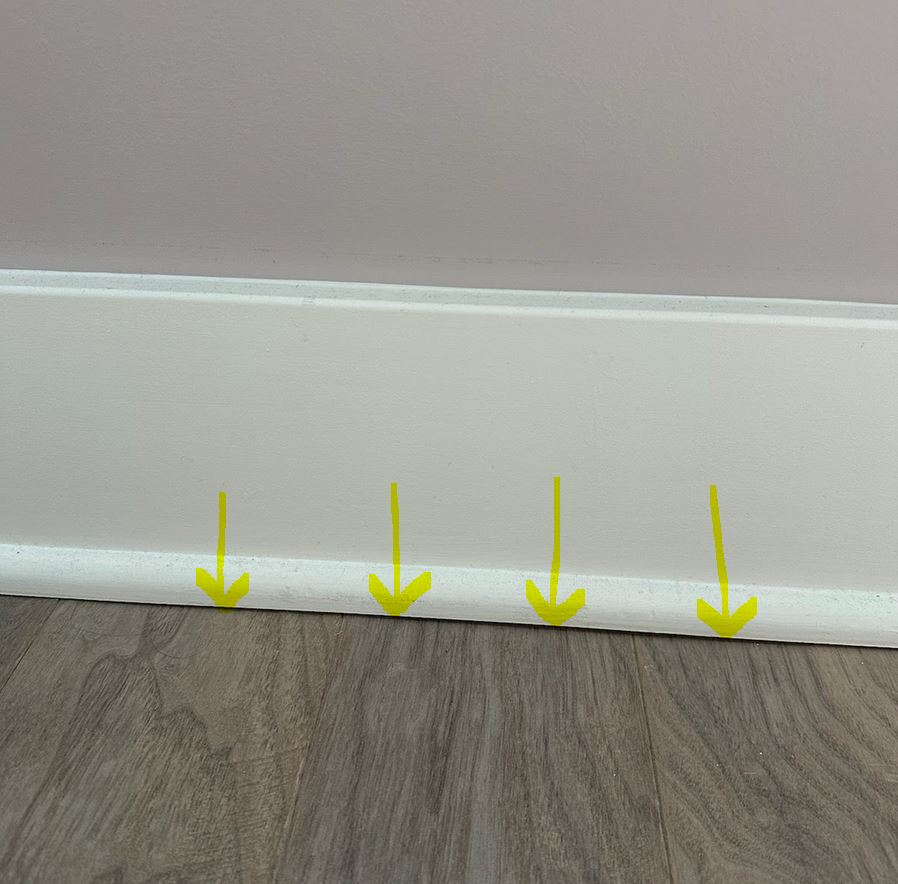
 Quick question, what’s the difference between spraying the Bithor every 3-4 days as opposed to using the Multipurpose or the dust? Is it because of the straw on the can? You think it will get in further under the wall that way? Do springtails stay in that area or are they on the insides of the wall too? It just seems like there are so many, like they won’t stop. If we dust right above the molding inside the wall , is that a better solution because then any bug that goes in that space will die from suffocating? I’m afraid the multipurpose or Bithor won’t last inside the wall as good so whats best?
This is a great question. And when it comes to thoroughly treating under baseboards, the wall above them and around windows or doorways, the quick answer is that often times it’s the one that has the best overall repellency. Why?
Because baseboards, windows and doorways are the most common ROUTES OF ENTRY into most any home (other key points of entry include gutters and of course, things you bring home like groceries!).
First, understand what each formulation was meant to do. In other words, where you should spray each option so they help get you the best results.
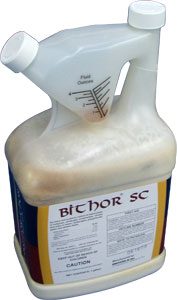 The first option, BITHOR, is needed as a surface spray to prevent pests from spreading out into your living spaces. Use it on the baseboard, door thresholds and with the MINI MISTER, you can even spray walls. But Bithor won’t get the ones in the wall, under the baseboards and sill plate or any that could be in the wall space higher up. And it won’t repel them. So for light issues? Fine. But if you still have activity in these same areas after 2-3 weeks, time to step up to something stronger.
Now it comes to the empty wall space above the baseboards, nothing is better compared to XEMPT DUST. Use it in the wall “above” the sill plate and other hidden spaces like in and around electric outlet covers, behind light switch covers and around AIR VENTS. It’s also the best option for any crawl spaces or attics. In these environments, it can last 1-2 yrs, cover large areas with no water needed and once in place, will repel pests from using those areas to nest. So for many pests that like to live in these areas, the dust is usually the best formulation for the job.
So what’s best for under the baseboards? At this time, the best combination is using our POWER INJECTOR with BASE OIL and XEMPT EC. This trio will allow you to create the biggest buffer zone because they score the highest when comparing kill and repellency (see PENETRATION VALUES). is no stronger option with the Maxxthor and when combined with Base Oil, you’ll enable the treatment to penetrate better than anything else available. This can be be critical for solving ongoing issues with pests like SPRINGTAILS that like to live under the sill plate or flooring (especially for homes with slabs).
So first, its important to understand pests like Springtails, Termites, Booklice, Psocids or Clover Mites will be very comfortable in tight spaces where wood meets wood or where wood meets cement.
And under a baseboard, there are layers of potential nest sites.
To give you an idea of how many, check the picture below. Each red line shows where they will likely love to nest.
And it won’t be one magical spot.
Pests like springtails and clover mites are solitary. This means they’ll be widely dispersed and could very well be thriving under any section of these areas in your home.
This also means that once they get active (whether to reproduce or avoid adverse weather), they’ll be coming since they can only emerge at a few spots (like from baseboards, windows and doors), their journeys will lead them to the same places no matter where they’re coming from. This means they’ll be emerging from these areas over and over – even if you’ve repeatedly treated under the baseboard – because they have no place else to go once active.
To stop them will require using the strongest repellent possible along with getting it applied as deep as you can.
And though the Power Injector can help, using the right formulation will be equally important. And at this time, nothing penetrates as deep as Xempt EC and Base Oil.
Using the Power Injector, you can get as deep as possible. To be clear, we strongly recommend using no more than 20 psi to start and then increase the power over time. After a few treatments, you’ll begin to reach the SATURATION COEFFICIENT, which will help create the biggest buffer possible.
Now lets talk about what these pieces of wood represent..
If you click the picture below, you’ll see there are numbers on the different pieces of wood.
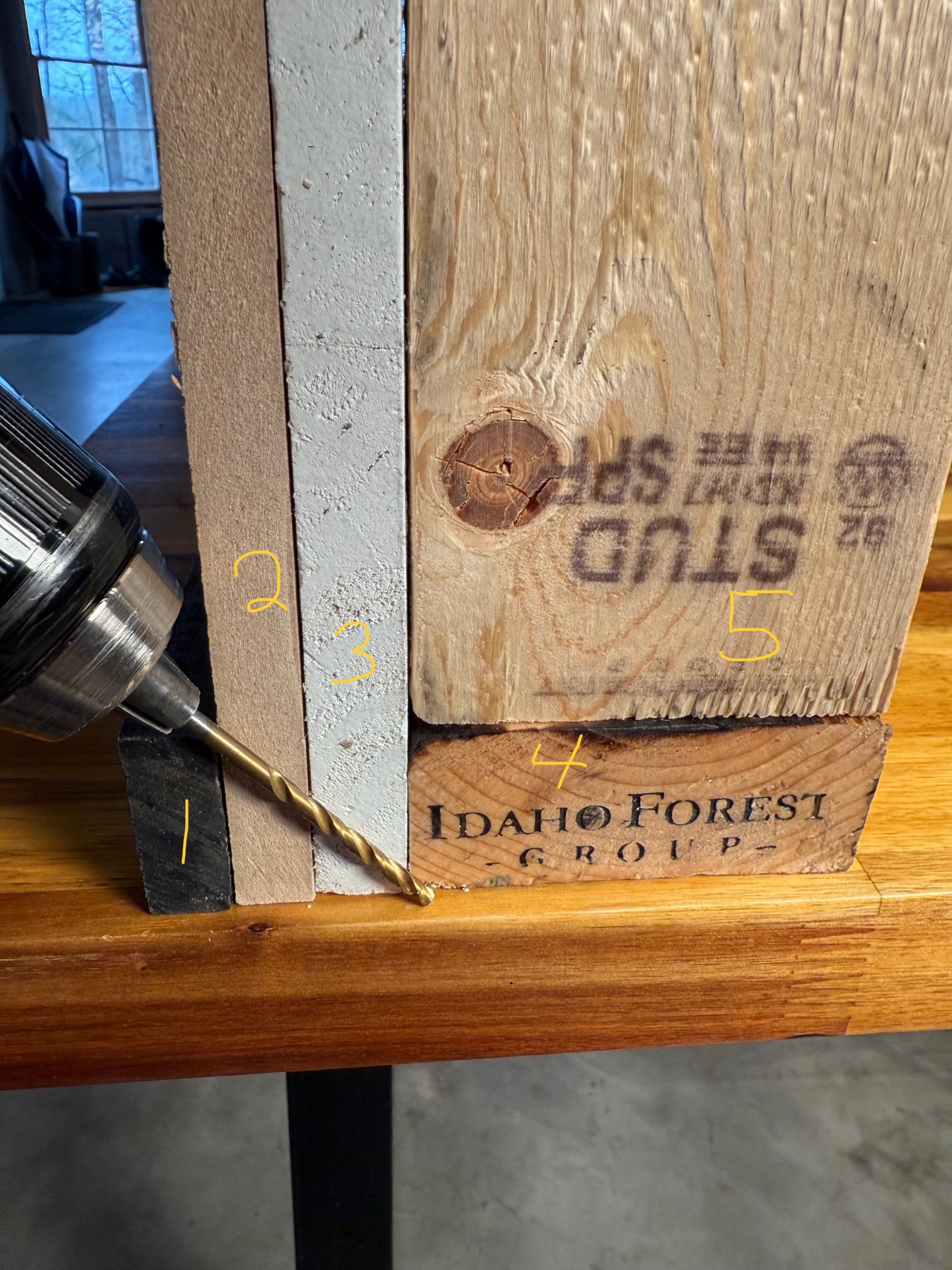
The piece numbered “1” is the Toe Molding. It’s usually in the 1-2″ tall range.
The piece numbered “2” is base molding. It’s usually 6-12″ tall.
The piece numbered “3” is the wall covering, usually sheet rock or paneling.
The piece numbered “4” is the sill plate. This is the wood that rests on cement slabs (if your home is built on one) or subflooring (if the home has a basement or crawl space).
The piece numbered “5” is showing a stud. This is the wood that runs “up”.
Some walls will have even more layers but the point of this picture is to help explain just how complicated a wall can be and how it can offer so many living spaces for small pests to thrive.
Remember, these small insects do not want to be out in the open. They’re wired to live hidden away, in tight spaces, so they’re not consumed by predators like birds or other insects.
This also means it can be very easy to miss 99% of an active population that’s living behind your wall.
And this is when the Power Injector with the right mixture can really help.
So let’s say you’re injecting with a thick SC formulation, like Bithor and water. Well it won’t get much past the toe molding if you’re only treating under that small gap where the molding lays on the floor. As you can see, there are spaces and gaps between every “layer” of the wall so ideally, you want to get as many of the treated.
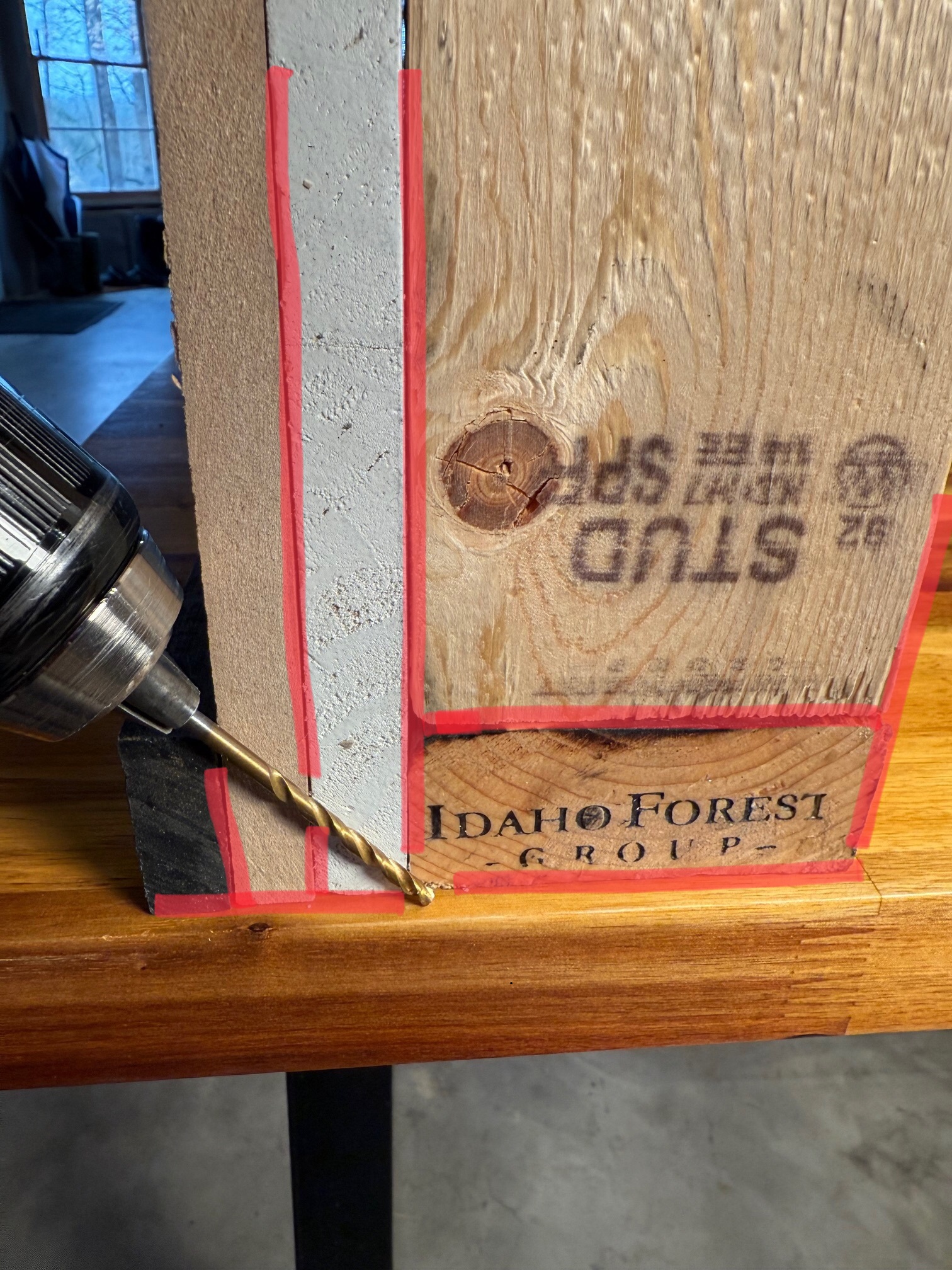
So the first thing you try is drilling an angled hole.
As you can see in this next picture, drill bit is placed at a 45 degree angle. This allows it to reach all the way under the sill place. And when power injected, you’ll get your mixture to reach nearly every layer. The only one missed will be where the studs lie on the sill plate. But even that small area can be affected with the right mixture.
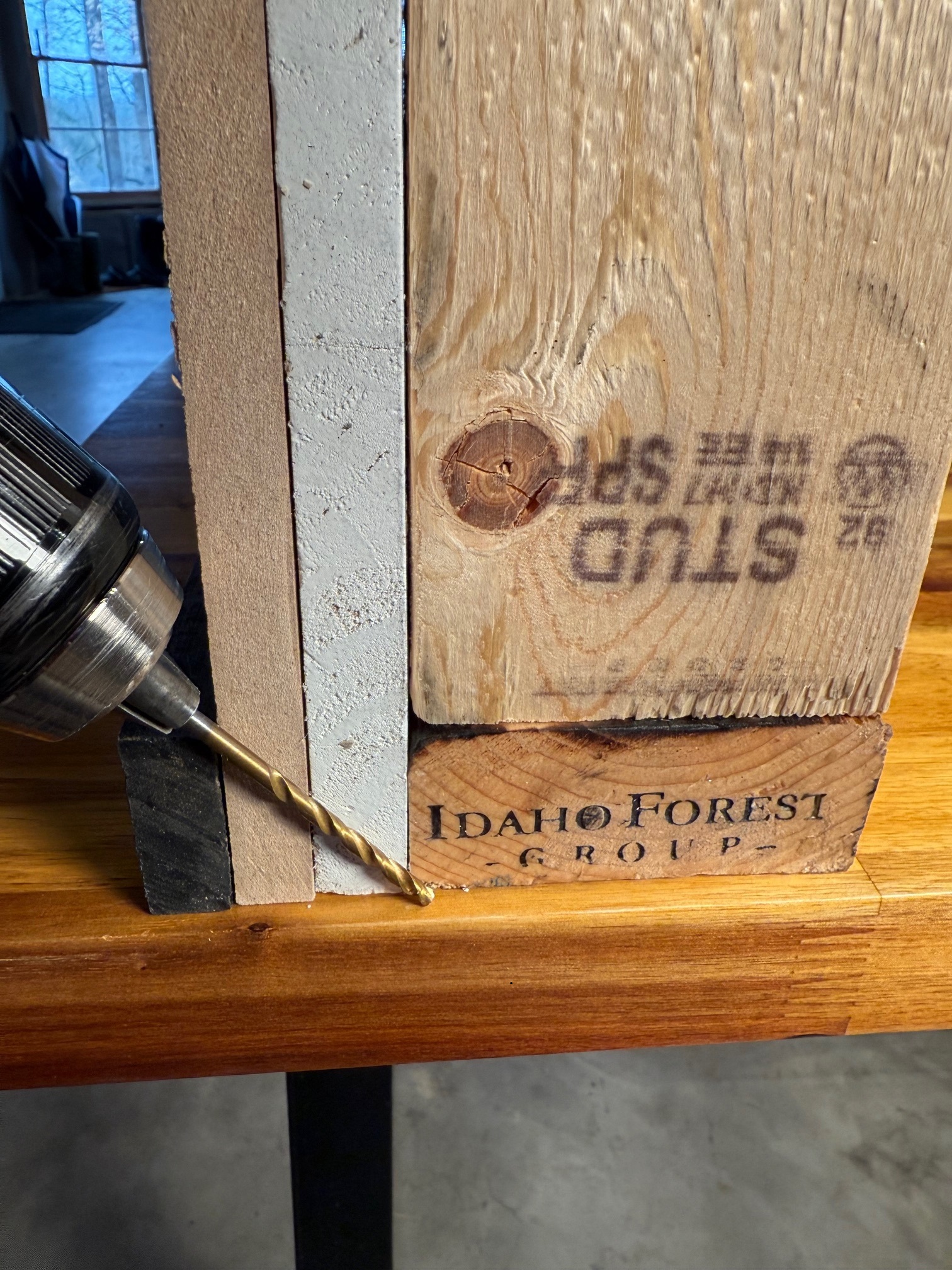
And this is when a tank mix that has Base Oil will definitely help.
So if your goal is to get as much of these layers treated, combine the Base Oil with the Xempt EC. This combo will kill any that are there but again, the goal of these treatments is to create that buffer zone so the wider and deeper your treatments reach, the less you’ll see coming out in the open.
In summary, if you keep seeing pests reappear along baseboards after surface spraying with Bithor, that would be a sure indication that pests are living in some of these hidden layers and probably migrated down from the attic above, the exterior home siding or from the slab below (if you have a slab).
And since they can live in those spaces their whole life, they will only journey out when their numbers grow and they need more room to nest or in the case like springtails, are actively reproducing.
Unfortunately surface spraying WILL NOT end the issue (of them emerging) because often times the source (under the baseboards or in the walls) will be releasing new ones faster than the Bithor treatment can kill them. So if you want to end having to see any, you’ll need to focus on these two areas with the space under the baseboards being the most important. Once those areas are properly treated with the Power Injector, no pest will be able to use them for nests and so the sightings inside will be dramatically reduced if not eliminated.
Here are links to the products needed:


tags: springtails, clover mites, base oil, under sill plate, bugs in wall, toe molding, power injector, power injecting, door threshold, bithor, xempt dust, exempt d, maxxthor ec, maxthor
Maria Gasca says
If I cannot get access to Maxxthorr because I live in CA, can I combine the base oil with anything else in order to get under the baseboards and into the walls?
Tech Support says
Maria,
At this time, we have one other option you can see here, the Pest Xempt C.O.
https://bugspray.com/exempt/liquid/pest-xempt-8-oz-cottonseed-oil
This won’t yield long lasting residual BUT if you treat 5-10 feet and get positive results, then you will know it will be worth the effort to get it applied. At that time you could treat it all to at least knock them out and then come back here to this page and check to see if have another option listed. We actually expect that later this month we will release Pest Xempt EC. This will be oil based and compatible with Base Oil but have to conclude testing and packaging before it’s added to our site.
Tech Support
bugspray.com
Text-a-Tech: 678-667-2284