HOW TO TREAT UNDER PATIO SLABS OR POOL DECKING
Many pests can thrive under patio slabs, pool decking, stoops and walkways that connect to buildings. The short list includes TERMITES, FLIES, SPRINGTAILS, ANTS, MILLIPEDES, CLOVER MITES and CENTIPEDES.
And if you’re seeing any of these pests inside the home and the home is built on a slab? This would be a very good sign they are living and thriving under the slab and coming up during their active season. This typically happens in the spring but will persist through summer and get active more in the fall before winter. And since homes will be warm all winter, pests living under it will often be active even if it’s below freezing outside. Winter Treatments are highly recommended for most slab homes to keep key points of entry protected.
SLAB HOMES CAN BE THE MOST CHALLENGING TO PROPERLY TREAT!
Unfortunately, slab homes can be the most difficult environment to do efficient pest control. Slabs are built on dirt and since insects love cement and perceive it to be another rock to use for shelter, they’ll naturally want to nest under it. This means you could have all kinds of pests living right under your feet!
The treatment issues are further enhanced since slabs will have flooring like tiles, carpets or wood covering points of entry. These will impede directly reaching these hidden nests making pest eradication extra hard to accomplish compared to homes built over a crawl space or basement.
Lastly, slab homes will have direct points of entry often hidden. These will be under sink/tub and shower traps where drain and water pipes penetrate the cement. Slabs can also have natural design joints (common in floating slabs) or cracks (which will form naturally over time).
In general, most every service company and homeowner will attempt to solve pest problems on a slab by surface spraying. But for pests like TERMITES, SPRINGTAILS and CLOVER MITES, this won’t work. So if you have been treating your exterior foundation below the home siding along with a good 10 feet out into the mulch or grass and continue to have pest issues inside? This would be a clear symptom of having pests entering from entry points inside the home OR indicate they are living under baseboards, cabinets, tubs and flooring.
WHAT TO LOOK FOR INSIDE THE HOME TO HELP IDENTIFY KEY AREAS
Another sign they are coming from that area is when you see them around tubs, toilets, showers, where pipes come through the floor and basically anywhere this is a gap or crack they use to enter. Unfortunately surface spraying won’t stop them due to what we call the “replacement effect“.
So if your goal is no longer see them inside? You may have to eliminate them at their nest.
WHAT TO TRY FIRST
But before you start drilling through your slab, try our POWER INJECETOR. Designed to penetrate under tight joints where wood meets cement, you could very well treat under your BASEBOARDS, DOOR THRESHOLDS, HOME SIDING and WINDOWS well enough to get adequate control.
And if you can reach where the pipes come up under the tubs “trap”, treat there too.
In some cases, this will keep them underneath the slab so it’s a good “first step” approach. Just keep in mind that ultimately you may need to deliver chemical under the slab to stop them from invading.
WHY DO PESTS LIVE UNDER CEMENT?
The quick answer to this question is that first, cement is like a giant sponge. It will collect any and all moisture around it and the bottom side will invariably grow mold and mildew. This organic growth will be food for many pests and in turn, why they’re attracted to the area.
The second reason is the soil under cement is typically perfect for many pests because it will settle. This settling will create a small space between the bottom of the slab and the dirt below. This space will allow crawling pests plenty of room to move about and perform their daily tasks.
The third reason is this area will be well protected from direct sunlight, predators and rain. Think of it as a small cave in which insects will be protected, well fed and very content. Add a little algae, mold and water and well, you’ve now got the perfect nest site!
HOW DO YOU TREAT UNDER THESE CEMENT SLABS?
So the first way to get chemical under a slab is to meticulously treat all cracks and gaps you can find by “pouring” your tank mixture into these spaces. This isn’t the most productive but it can help so try this first to see if it helps.
The following “short video” (less than 60 seconds long) shows how this can be done:

But if the gap space is limited, it can be tedious, time consuming and a bit messy to get the job done. So how do you know the treatment isn’t reaching deep enough? Because whatever pest you’re targeting will still keep coming up. This is when you’ll know that’s time to either drill through the top of the cement or to Power Inject.
In this next video, you will see active clover mites and springtails have come back even though the cracks and gaps have been sprayed. Essentially the limited access and treatments using the existing cracks were not able to reach them far enough underneath the cement to keep their numbers reduced to where none are coming out. The net result is that the main nest is still very active doing its normal things like eating, mating and generating more mites. And that means they’ll be emerging and being visible on a regular basis.
There are also active springtails, ants and other pests coming from this same slab and so this cement needs more attention.

So as you can see, there are plenty of active pests coming up from this cement. And this pattern will be ongoing until the gap and the bottom of the slab is saturated with enough chemical that the pests won’t be able to pass through the barrier.
POWER INJECTING UNDER CEMENT
The next best option for getting your chemical under the slab is to Power Inject. Generally used for inside treatments under baseboards or door thresholds, our POWER INJECTOR can be pressurized to 90 psi so it can blow your mixture much further under the slab compared to drenching.
For small areas, the Power Injector is manageable and will help. But since the tank can only hold 16 oz of mixed chemical, you might find yourself refilling quite a bit. The average 10 foot run of patio gap will require at least 2 gallons of mixed solution to properly treat. So if you have a lot of cracks or gaps to treat, consider getting the SKY-HY NO PUMP SPRAYER AND POWER INJECTOR.
The Sky Hy is available with either a 1.75, 3.0 or 5.0 gallon tank. And with the included 12 foot hose, you can treat 10-20 feet of cement with one tank full instead of having to fill up the small Power Injectors tank 15-20 times.
The Sky Hy comes with Steel Injection Needles which are better suited for rough terrain like cement. And the wider hoses allow product mixtures to flow 3-5 times faster to save time.
When Power Injecting with the Sky Hy, you’ll be able to fill the space rapidly – much like a flash flood – and when this happens, the liquid will naturally flow to empty spaces under the slab. This means it will effectively turn to reach where target pests are nesting making your application much more thorough.
So if you know you have pests coming from under cement around your home and you don’t feel like drilling holes to pump under it, consider the Power Injector for small areas or the Sky Hy for maximum penetration.
BUGSPRAY SKY-HY NO PUMP 1.75 – 3G – 5G HIGH AIR PRESSURE SPRAYER 40 FOOT REACH
WHAT IS SUB SLAB TREATING?
Sub Slab Injection is when you drill holes through cement so you can inject them with your chemical mixture.
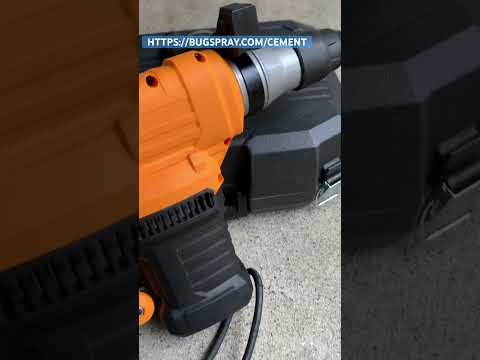
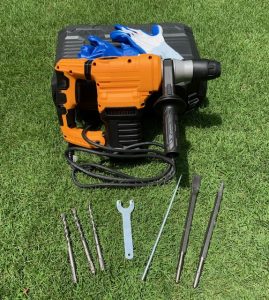
Most cement slabs will be 4-6 inches thick and a good HAMMER DRILL will drill 1/2″ holes through this in 15-30 seconds. Space holes 2 feet apart and about 3-6 inches from foundation walls.
The following “short video” (less than 60 seconds long) provides a quick overview of why drilling holes may be needed along with showing how our SUB SLAB INJECTOR works.
Our Hammer Drill comes with several drill bits including a 12″ long by 1/2″ wide bit ideal for thick cement.


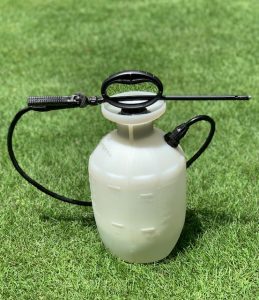
To treat the holes, use our SUB SLAB INJECTOR.
It features a wand that will fit through 12mm or 1/2″ holes and will shoot the chemical mixture sideways a good 1-2 feet as seen in the video above.
Here are links to the other products needed to get the issues seen in the video’s above addressed:


REVIEWS & QUESTIONS