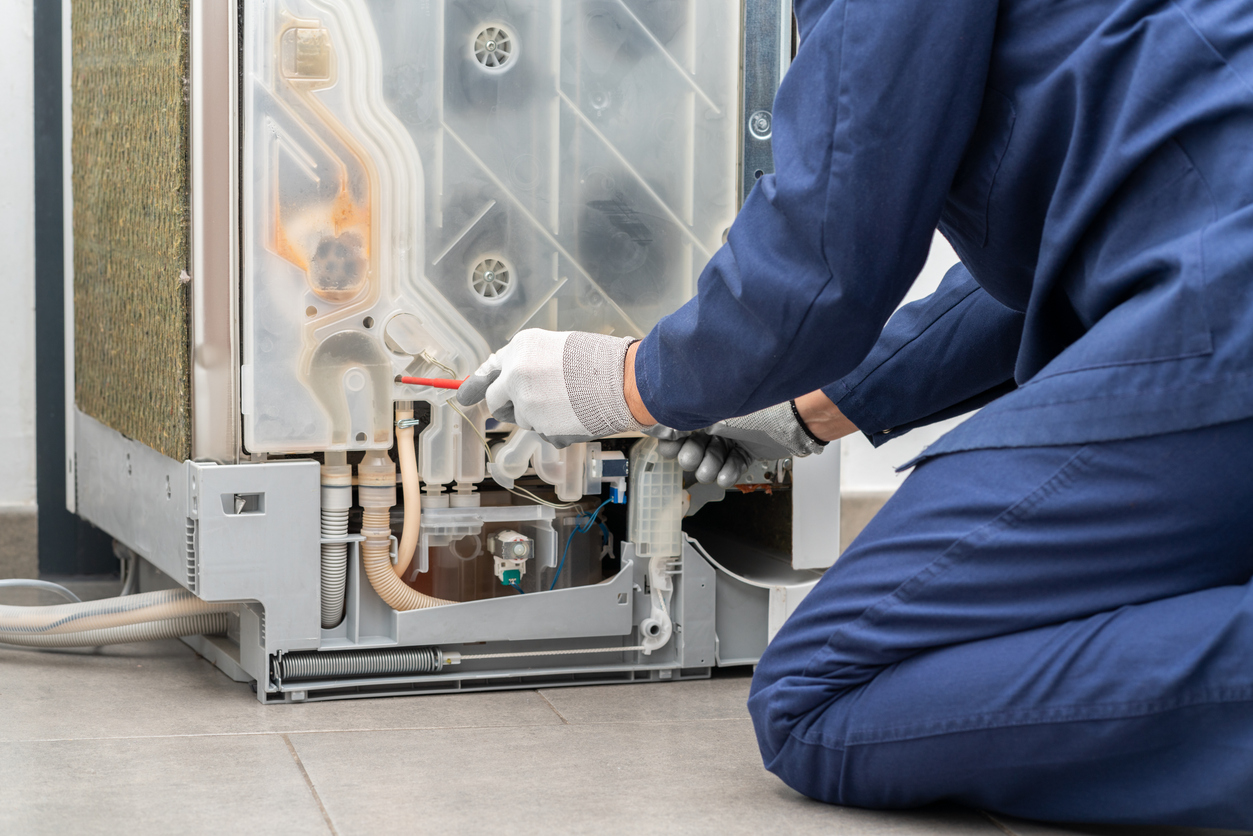
I watched your video on how to treat my microwave and the mister really helped. I found a bunch of dead bugs the morning after I treated through the vent. Should I do the same kind of treatment for my dishwasher? I see them coming from the side and it’s built into my cabinets under the countertop so not sure how to treat them all. I can see the bottom panel can be replaced and there are a lot of places there where they could be living. But what about the sides?
Pests like ROACHES and SPRINGTAILS love any place that’s dark, damp and safe. This includes a wide range of common appliances like dishwashers, washing machines and ice makers. Though each of these appliances are constructed differently, they all have hidden voids where these bugs can thrive. Delivering your treatment into these spaces will be key to both pest prevention and elimination.
Unfortunately it’s not really possible for us to do videos on every appliance that might get infested. That said, the same methods apply to any and all of them. Here is a summary of the steps you should take.
First, if possible, having access to the space under a front panel (like on a dishwasher) as well as the sides and back will be important. This is especially true when treating ice makers and dish washers.
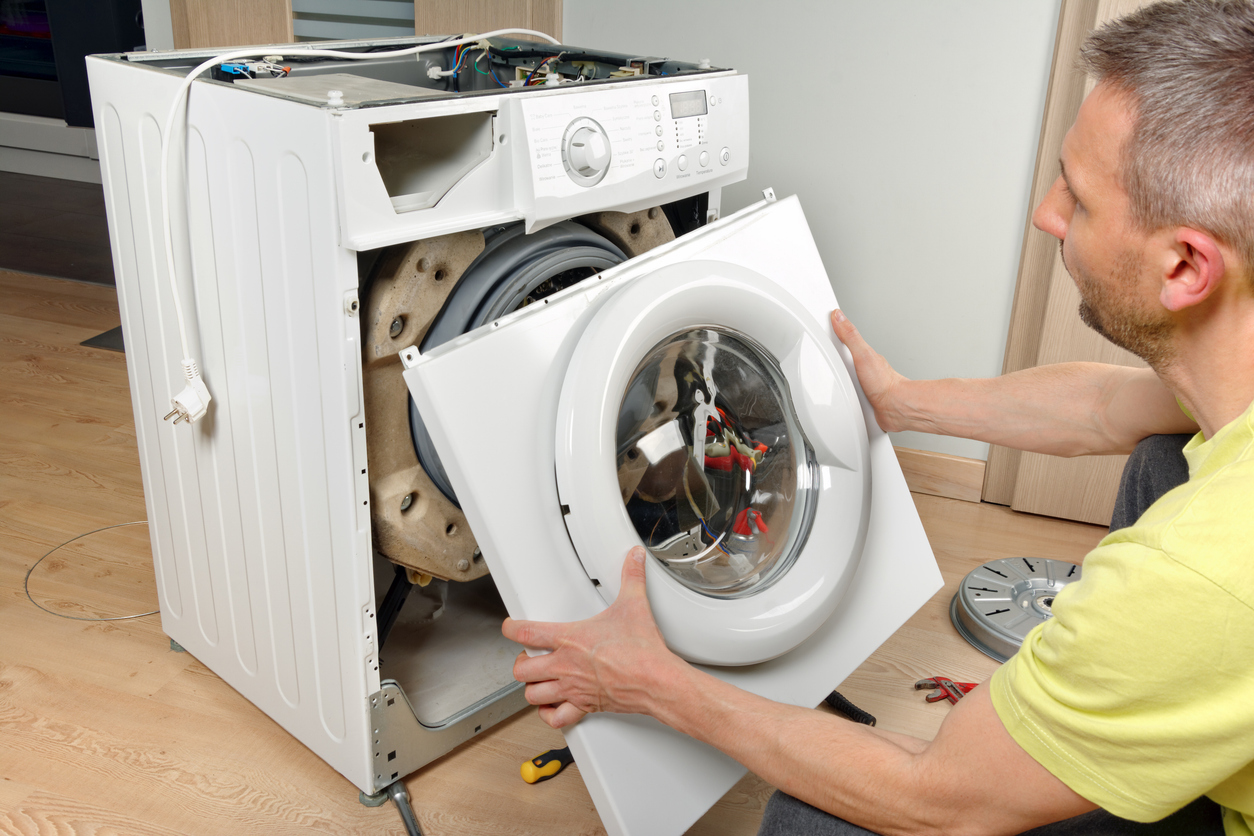 Clothes washers usually have have a panel that can be removed (it may be the front or back). If its the front, get it open so you can see what’s going on inside. If it’s the back, pull it away from the wall to get it open.
Same with dishwashers. In most cases you won’t need to pull them out all the way out but 6-12 inches can usually allow you to shine a flashlight into the space so you can see what’s there and where to focus the treatment.
In general, any appliance that handles water will be a pest magnet. But since they’re built to manage water, they’re usually okay to spray safely.
Second, avoid spraying the electric components. If there is a solid state electric panel, power cords and/or motors, don’t spray them. Aerosols are most damaging due to their solvents; a light mist from the MINI MISTER usually won’t be damaging but should be very light and minimal to avoid damage.
Third, focus on all gaps, seams and any joint where metal meets metal – especially if you find these joints use bolts to keep them connected. Most pests will be located in these areas so get them all treated whether you see pests there or not.
Fourth, use the Mini Mister with BITHOR where possible. It’s odorless and with it’s non-repelling residual, can provide the best long term protection so you won’t need to keep retreating.
Fifth, look for leaks and pay extra attention to any insects you notice – dead or alive. These spots are likely to be used again in the future so knowing where to look can be helpful if the problem arises in the future.
Lastly, POWER INJECTING can be needed if there are hidden cavities you cannot direct a mist or inspect. Again, every appliance is different and some are so small and complicated, it may be difficult to deliver the needed treatment where it needs to reach. When this happens, you’ll be confronted with a problem that could be ongoing – especially if the target pest is finding enough hidden food (like mold/algae/mildew) to keep them self sufficient. For any such appliance, Bithor is usually the best active and getting all the surrounding surfaces treated can usually keep the problem from spreading to other areas of the home. That said, get those surrounding areas treated too – especially if there is a sink close by. Most any insect will be drawn to a sink/drain and you may need to do some down the drain treatments with LEMON AIR if they move into your pipes.
BUGSPRAY MINI MISTER PRO RECHARGEABLE AEROSOL SPRAYER 12 OZ | BUGSPRAY
LEMON AIR PLUS or SANNI-SHINE PLUS INSECTICIDE “DOWN THE DRAIN TREATMENT” 128 OZ
Leave a Reply