CENTIPEDE OVERVIEW
Centipedes can become a perimeter pest to any structure. If given the chance, their numbers can reach high enough levels around the home which will lead to seasonal migrations inside living areas. This article will provide detailed information about this insect, why they can be a problem and how to treat local problems in and around the home.
Related articles: EARWIGS MILLIPEDES PILL BUGS SCORPIONS
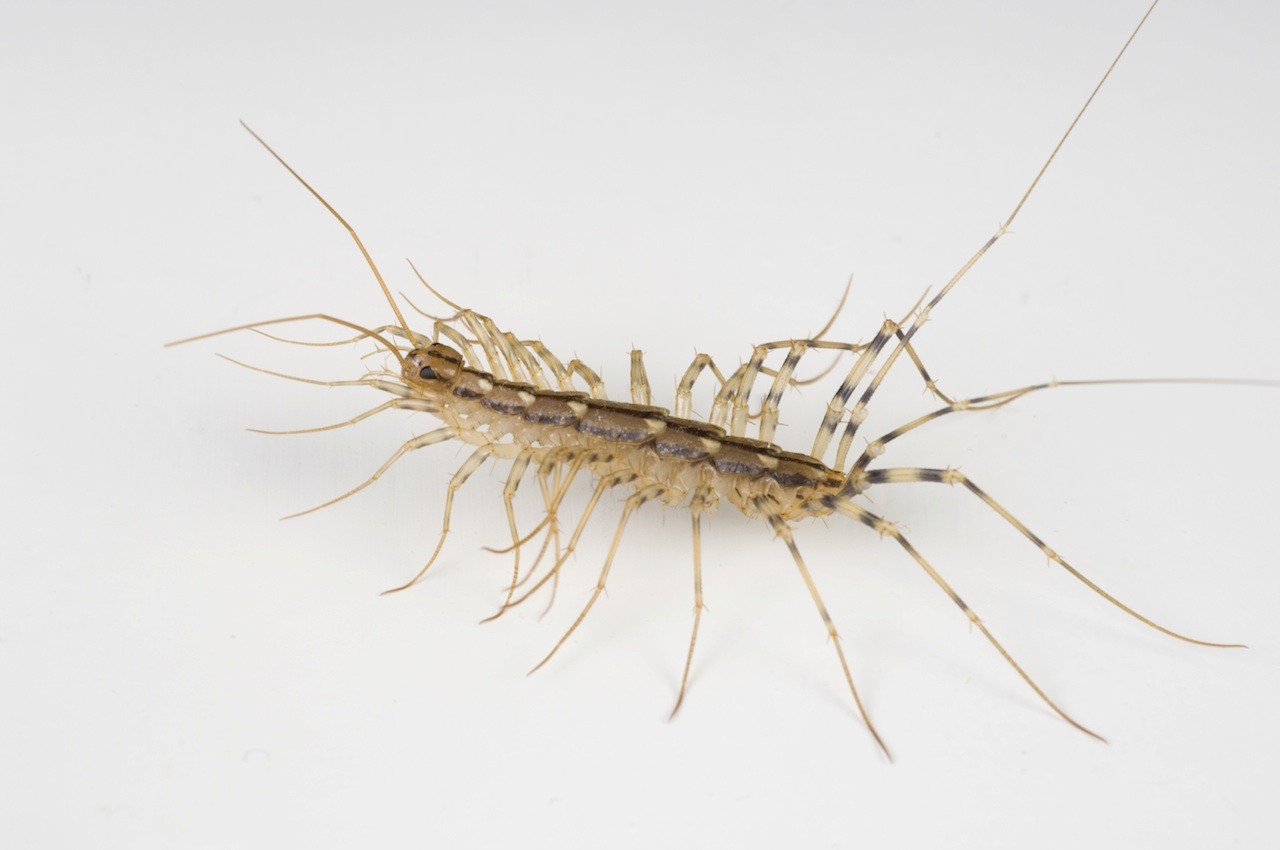
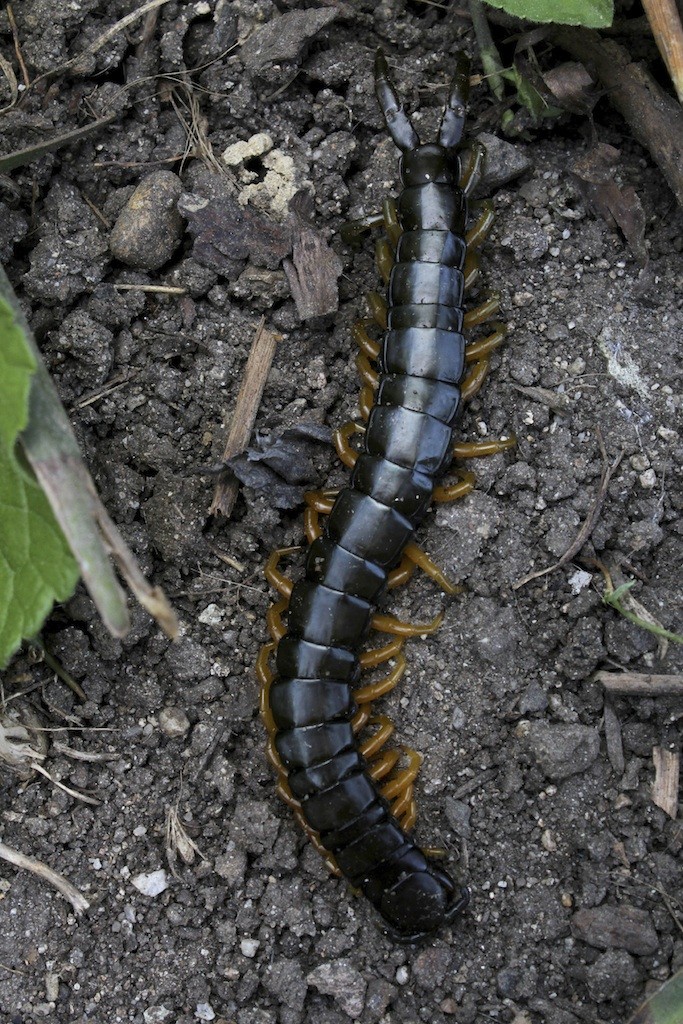
Centipedes like to live in the same environment as millipedes, sowbugs, pillbugs and scoprions. There are two common species of centipede in the United States. The common house centipede which has long antennae and 15 pair of long legs.
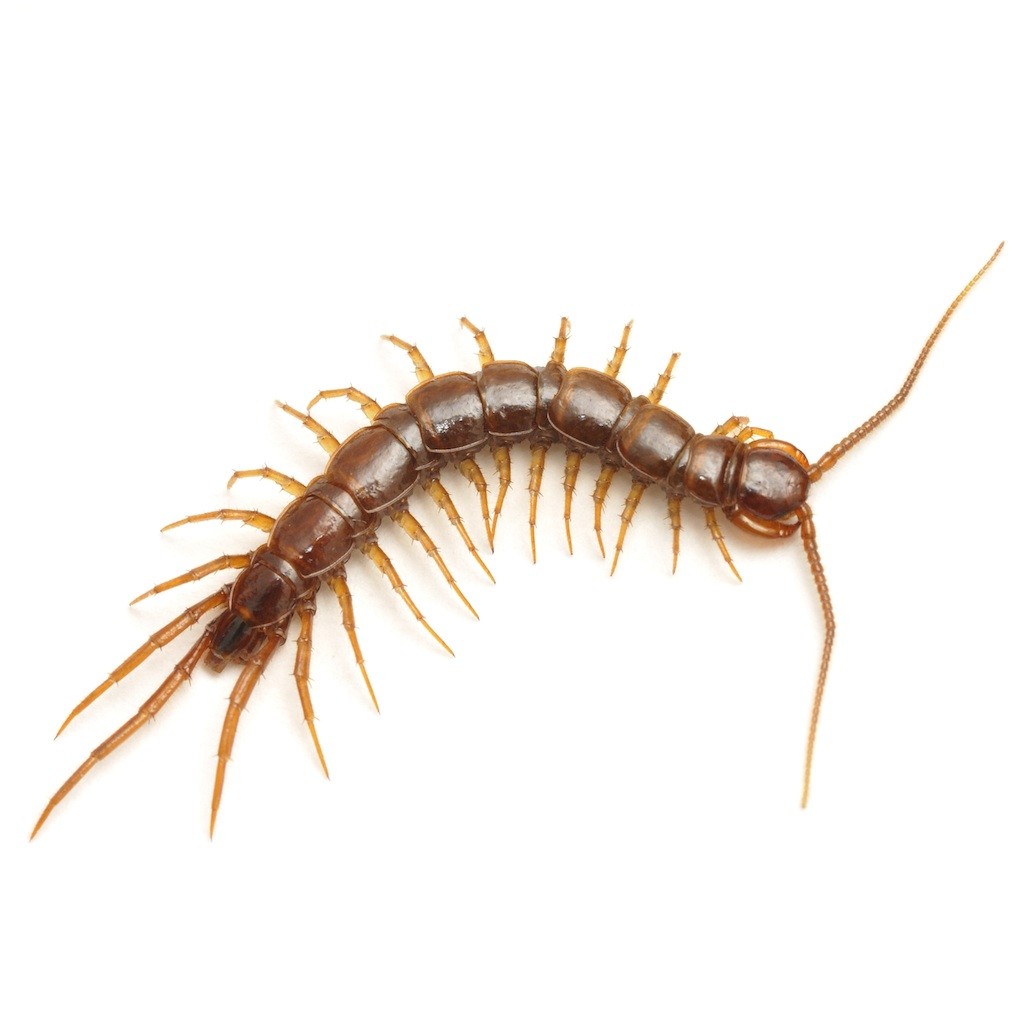
The other species is more “snake like” and commonly mistaken for a millipede. They gyrate when they crawl which seem to bother most people. Both species are aggressive hunters and will bite if handled. And though they’re bite is not lethal, it can hurt and cause adverse reactions. For this reason one should avoid handling centipedes.
And this video gives you a good idea of how they move.
Both species can move rapidly and will commonly stop and go for long periods of time when on the prowl. The second species of centipede is both larger and longer. More common in the south, this centipede can grow to over 5 inches long.
Since centipedes tend to forage in “nasty” locations, they can carry a wide range of germs and bacteria. They bite is well documented but its more likely the amount of disease they spread has more of a direct impact on people.
CENTIPEDE TRAPS
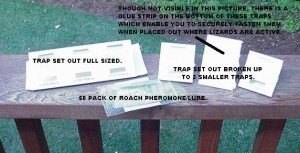
Like millipedes, centipedes are slow to develop. They like moist areas to nest and roost. These areas include mulch, pine straw, thatch, leaves and under rocks or logs. The big difference between centipedes and millipedes is that centipedes like to eat other insects. For this reason, CENTIPEDE TRAPS can be helpful. Please these where you either see or suspect centipedes may be active.
Traps should be spaced 10-15 feet apart and set along baseboards or routes of entry like on either side of a garage or patio door. These traps use a range of insects for bait which will attract hungry centipedes. Once they enter, they’ll get stuck on the tacky glue inside and caught.


Centipedes are one of the few predators which feed on spiders. They prefer to move at night, but like millipedes will migrate any time of day during certain conditions. Its not uncommon to have them migrate when water levels rise. This commonly happens during the winter and spring rains so the fall through winter into the spring is the time when they can be very active.
Centipede nests may host several hundred and when they migrate, all will move in the same direction. This will lead to infestations in the home if allowed to live comfortably outside so for most situations, treating the outside of the home is where you need to start.
BEST CENTIPEDE SPRAY FOR THE HOME SIDING
To start, you’ll want to treat the ground around your homes foundation immediately adjacent to the foundation. This will both kill any present and keep them from using the area. Do this first before treating the yard around the home. This way you’ll have a barrier in place so none will migrate from the lawn into the home.
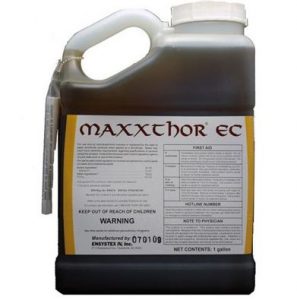
The best spray for long lasting fast results is MAXXTHOR EC. This actives work well because the liquid is irritating to centipedes and penetrates all cracks and crevices where they like to nest.
Maxxthor should be mixed 1 oz to a gallon of water and for the average home, 1-2 gallons should be applied onto the homes siding and foundation.
To put out the protective barrier, you’ll need to focus the spray on a band 3-6 feet wide. Basically covering a 2 foot area of ground and a 3-4 area up the side of the home. This way you have in place a protective barrier that will both repel centipedes and kill them if they choose to cross the treatment.
To get the most of your treatment, add SPREAD-X BOOST to your tank mix along with the Maxxthor. Boost is an adjuvant, also known as a wetter spreader or spreader sticker. It basically makes water and the mixture more “slippery” so you get better coverage. Treatments will spread 2-3 times wider and penetrate deeper.
The following short video summarizes why Boost can help deliver your treatment to where it matters the most. And this is extra helpful when treating homes with siding like vinyl, aluminum and stucco where centipedes might be hiding. It can also be helpful if they’re nesting down deep in mulch enabling the Maxxthor to reach their nests.
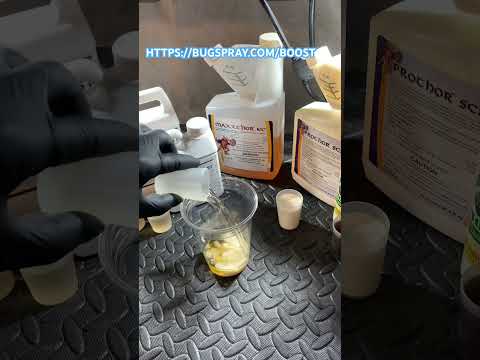
Add no more than the rate you’re applying the Maxxthor so in this case, if you’re adding 2.5 oz of Maxxthor to the hose end sprayer, add 2.5 oz of Boost too before adding water. If you’re adding Maxxthor to a pump sprayer at the rate of 1 oz per gallon, use 1 oz of Boost.
And don’t spray in the middle of the day; treat late in the day close to sunset so the treatment can dry without direct sunlight. UV light on the Boost can stress plants if the temperature is 85 degrees or higher so treat 2 hours or less before sunset to reduce sunlight stress.

In general, one thorough treatment will kill off the ones living there. Plan on treating quarterly (every 3 months) to ensure they don’t come back.
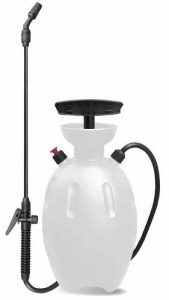
For most treatments, a good PUMP SPRAYER will be needed. Make sure it can produce a wide “swath” to insure proper coverage. Pin stream sprays are not recommended.
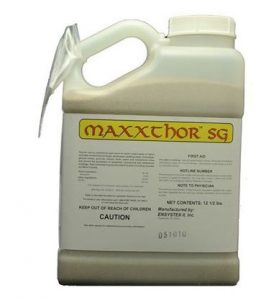
Next, consider treating the ground around the home with MAXXTHOR GRANULES. This will be needed if you have a lot of mulch like pine straw or wood chips.
Plan on treating at least a 10 foot wide section adjacent to the foundation. This would be the minimum area to treat; the more the better. So if the side of your home is 50 feet and you treat the whole side, 10 feet out, you will be covering 500 sq/ft. This will require .5 to 1 lb of the granules and like the spray, you should apply them every 3 months.
CENTIPEDE SPRAY FOR INSIDE THE HOME
If you have centipedes in the home, there will be a few areas to focus on treating.
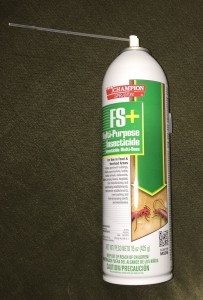
The first will be points of entry around doors, windows and under cabinets. A decent spray to try at first will be FS MP AEROSOL. This ready to spray aerosol is fast acting, comes with a crack and crevice injecting straw for reaching their nests and once in place, will can control a moderate problem. FS MP is highly repellent so they won’t want to come in through the cracks you treat. Plan on using 1/2 can every time you treat and spot treat as needed. If you notice activity just 1 week after you sprayed, it means you didn’t get their nests so treat again.
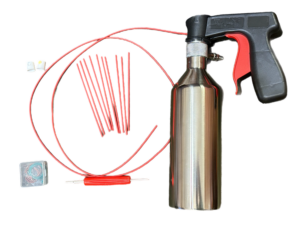
Now if the problem is deep rooted, especially if you have a slab or crawl space which will be prime locations for them to nest, you may need our POWER INJECTOR.
So just how can the Power Injector help? There are many reasons.
New for 2025, the POWER INJECTOR is a tool we’ve all needed for a long time. It was first created to effectively replace aerosol products to help reduce on cost and waste (of throw away cans) but its turned out to be a lot more.
So first, the Power Injector lets you get to control what you’re spraying. That means now you can use the best chemicals (like our Maxxthor) up under the home siding instead of lesser actives found in aerosols (like the FS MP listed above). Currently there are no “ready to spray” aerosols which use these top of the line actives and when you combine the best active with the penetrating power of the Injector, you can reach deep nesting pests like centipedes.
So how do you control the penetrating power?
Simple. Standard aerosols run on 15-20 psi. But with the Power Injector, you can power it up to 90 psi. This will get you 3-5 times deeper penetration which can be all the difference when it comes to solving tough pest problems nesting in wall voids or behind home siding.
Third, you can use BASE OIL in the Power Injector. Unlike other oil based aerosols that have odors (like FS MP), Base Oil is odorless and since its more refined, it penetrates deeper compared to any other option. Add to that the power of Maxxthor and well, you’ll have the strongest mixture at your fingertips for hidden spaces that will last indefinitely.
The following video highlights these features in less than 1 minute:
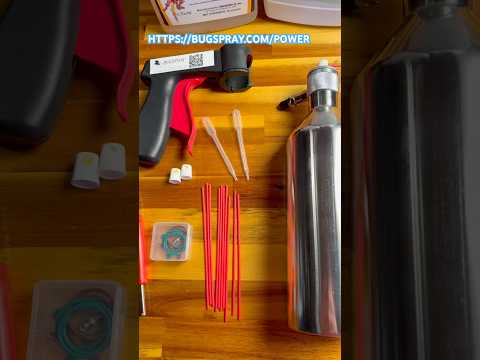
Now if you plan on getting Bithor (listed below), the Power Injector can be used with Bithor and water too. This means with one of the Aerosol nozzles, you can apply Bithor to any walls Centipedes are found using. The light mist aerosol tip won’t over apply the mixture preventing messy over spray.
But for deep nesting centipedes, you will really benefit is by using the Maxxthor/Base Oil.
The following short video explains why Base Oil is so good at enhancing the Power Injectors range:

As the video above explains, Base Oil can really help get deliver your treatments where it needs to reach. So if you’ve had issues under certain cabinets or wall voids where centipedes keep coming, the Power Injector is probably going to be needed. And since you can use it to apply Bithor and Maxxthor, you won’t need any of the aerosols mentioned above.
barbara fleming says
I rent an apartment, 1st floor, and I’m seeing large centipedes on floor. How can I get rid of them?
Tech Support says
Barbara,
If you read our article above, you’ll see several products listed that control centipedes. Ideally if you can spray the outside foundation with the Maxxthor concentrate, this will really help by keeping any outside from foraging inside. In fact centipedes will readily start appearing inside homes every fall as insects start to seek a safe place to live during the winter. And since centipedes are hunting other insects, they invariably end up inside.
So you state that you’re located on the first floor of your building and if thats true, its most likely that a good population of centipedes are living around the exterior of the building and from there, migrating inside. This is why a good exterior treatment would be the first thing to do because if you kill them there where they’re coming from, none will be available to get inside.
The next step is to “centipede proof” your apartment. This can be done by applying Xempt dust to all electric outlets (first remove the cover and then puff some Xempt inside) as well as under all light switch covers, light fixtures (where they mount to the wall or ceiling), where pipes enter the room (typically under cabinets, sinks and in some cases, through the flooring) and around heating/air conditions vents. Xempt is highly repellent to centipedes so it will prevent them from using these portals to your living space. And since treatments will last 6-12 months, you only need to treat once a year.
Lastly, spray baseboards, around windows and door frames with FS MP aerosol or better yet, the Power Injector. This will need to be done once a month as long as they’re active; once every 3 months to make sure they don’t return.
Maxxthor EC: https://bugspray.com/catalog/insecticide/liquid/maxxthor-ec
Eliminator Pump Sprayer: https://bugspray.com/equipment/sprayers/eliminator-gallon-sprayer
Xempt Dust: https://bugspray.com/exempt/dust/pest-xempt-dust
Hand Duster: https://bugspray.com/equipment/dusters/crusader
FS MP: https://bugspray.com/catalog/insecticide/aerosol/fs-mp-insecticide-15-oz-aerosol
Give us a call if you need more help. Our toll free is 1-800-877-7290 and we’re open 9:00 AM to 4:00 PM Mon-Thur, Eastern Standard Time.
Jonathan
Customer Care
https://bugspray.com
1-800-877-7290
PS: Please show your support for our business by purchasing the items we recommend from the links provided. Remember, this is the only way we can stay around and be here to answer your questions and keep our web site up and running. Thanks for your business!
Jamaica says
I am going crazy right now. I live in tropical area and so far I’ve killed 3 centipedes that’s I have spotted in less than 1 week! They creep me out..I can’t sleep since I’m here thinking they may crawl into my bed. Its almost 3 am, I just killed 1 and I can’t go back to sleep. I’ll be trying the mentioned methods and hopefully I can get rid of them.
luisa quintana says
My kids have been bitten by centepedes in our apartment. Our landlord is in denial even though I’ve shown him the bugs. What can I do to control these creepy crawlers on my own?
Tech Support says
Just follow the treatment recommendations listed above. No doubt the FS MP applied to crack or crevices where you think they’re in can help. But in the long run, if you can isolate the wall void where they’re coming from and dust it with the Xempt Dust, you’ll get much better control.
Here is a link to this item in our cart. Please show your support for our business by purchasing the items we recommend from the links provided. Remember, this is the only way we can stay around and keep this valuable web site up and running. Thanks for your business!
FS MP: https://bugspray.com/catalog/insecticide/aerosol/fs-mp-insecticide-15-oz-aerosol
Xempt Dust: https://bugspray.com/exempt/dust/pest-xempt-dust
Eileen says
Are any of these products harmful to pets? I have a 20 pound dog.
Tech Support says
When used properly, there will be no hazard presented to people, pets or the local environment (both inside and outside). For more details, just view the safety video’s we have for most any product where safety is a concern. These can be seen at the bottom of the product page and the video will cover all the general topics you’ll need to know in order to handle, apply and store our products. We have several and they correspond with the type of product (liquid, granules, etc.) You can also see them on our video page here:
Safety Videos: https://bugspray.com/safety-first-videos
Bret Earl says
Okay. I have a really really bad problem. They are in the house and I can’t get rid of them. I will try the Maxxthor. What month should I use it? I am in central indiana. FS MP Aerosol? Is it like a bomb? Or do I have to actually spray it?
Tech Support says
@Bret Earl: I think I just answered some questions you may have submitted and in fact I recommended you check out the article above for more precise details. So to answer the your questions, yes, the FS MP will help. But limit that to cracks and crevices and if it doesn’t get the job done, get the Power Injector.
For deep wall voids, go with the Xempt Dust. Treatments will last a long time and it works on most any pest. View the video we have on it’s product page for more information about just how good it is for wall voids and other spaces where these guys like to hide.
FS MP: https://bugspray.com/catalog/insecticide/aerosol/fs-mp-insecticide-15-oz-aerosol
Power Injector: https://bugspray.com/equipment/sprayers/bugspray-power-injector
Xempt Dust: https://bugspray.com/exempt/dust/pest-xempt-dust
Lastly, if you insist on spraying inside, go with the Bithor listed above.
Bithor: https://bugspray.com/catalog/insecticide/liquid/bithor_sc