If you’ve got CLOVER MITES, SPRINGTAILS, PSOCIDS or BOOKLICE, there is a good chance you’ll need to treat where they’re nesting if you’re goal is to not see them coming back a few days after you spray.
Why?
Because these small pests thrive where wood meets wood or where it rests on cement. And they are living their best lives in that space meaning if you don’t go to these spaces or deliver your treatment to where they are living, they will just keep coming out.
That means sill plate, structural members, wall voids (and all layers of the wall), attics, under baseboards and pretty much all hidden areas in attics as well as behind home siding. And it gets worse.
They are solitary. This means they will be spread out because they do not nest like ants or termites. So don’t expect to find them all grouped up in one area; it’s almost certain that they will be on 1-2 sides of your home if not all 4 sides.
But it gets even worse..
They will thrive in every “layer” of your homes siding – so not just where you see them like at the baseboards, around windows or doors. These are merely where they are emerging, what we call POINTS OF ENTRY.
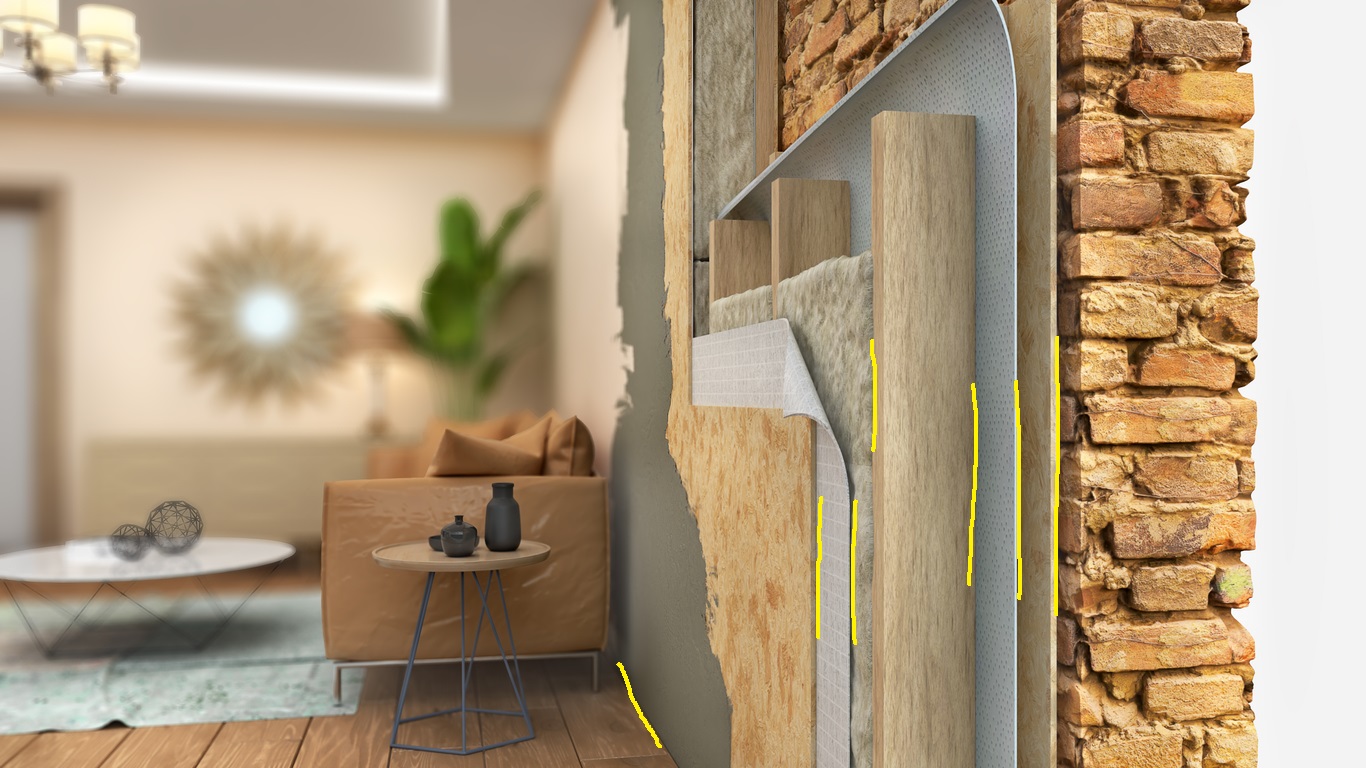
You see, they can’t come out from the middle of these voids so they will readily forage sideways and eventually emerge at your baseboards, windows and doors. The yellow lines in this next picture are there to show where they could be thriving. And this could be anywhere along the entire expanse of any infested wall. Now certain pests, like TERMITES or CARPENTER ANTS will cause enough damage to the internal wood that you’ll see where they are focused. But pests like CLOVER MITES or SPRINGTAILS won’t cause any degradation to the walls or wood behind it so you can never clearly know where they’re actually living.
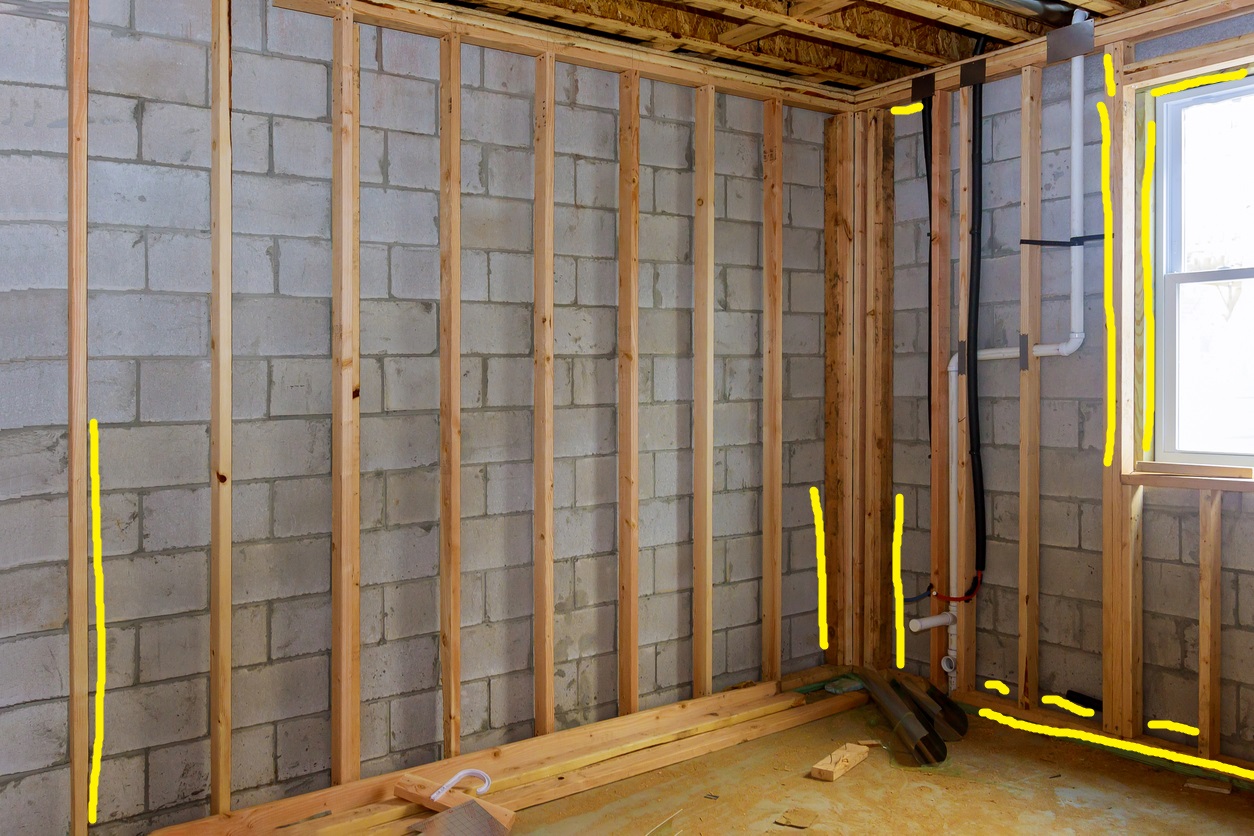
And if you have a finished basement where some are coming out at the baseboards? They’re likely thriving behind any or all of the walls. The typical areas for pests to nest here will be where the sill plate rests on the concrete flooring and where the runners go up and down the foundation walls. This next image shows some of the runners commonly used to secure wall covering. These runners are usually anchored to the cement and those sides that are touching the cement is where they’ll be living. For obvious reasons, it will be tough to reach these spots to treat (the key areas would be any of the runners, the sill plate at the floor and the sill plate above. We’ve added some highlights in yellow to give an idea of where we mean).
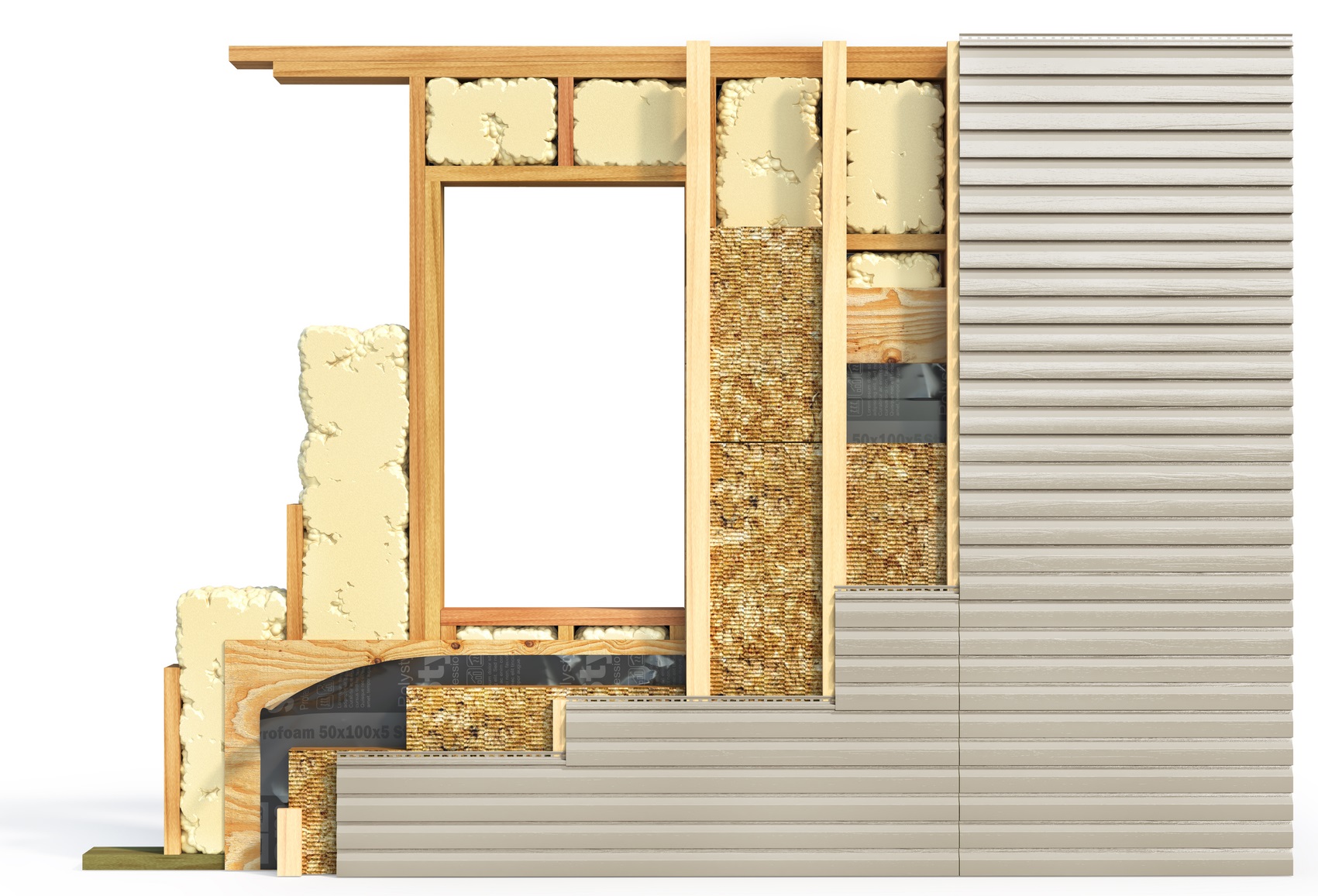
The same thing is most likely happening to exterior covering as well. In this next image, you can see the exterior vinyl siding is layered over decking which has a moisture barrier and then another siding over the studs. Every one of these layers can be housing pests like Springtails, Termites, Silverfish, Clover Mites and more. The most important void is clearly directly under the vinyl. And this space is usually quite wide, certainly wide enough for pests like wasps or bees, but most anything will take advantage of this area if it’s left unprotected.
So how do you reach all of these locations? You’ll need the POWER INJECTOR.
This is where most people fall short. They “expect” that all they’ll need to do to stop the invasions is leave a residual. And though these treatments are important, they won’t solve the problem. Here’s why.
When you “surface spray”, you can control pests that naturally forage out in the open daily. But termites, clover mites, springtails, psocids, silverfish and many others don’t actually come out all the time. And though surface spraying can prevent them from spreading, it won’t end the issue.
So if you’re goal is to end seeing any in the future? You’ll need to do “C&C” treatments.
C&C stands for Crack and Crevice. This is where these small pests thrive.
Now yes its true that many of our customers treating with Maxxthor outside and Bithor inside will cure their problem without the need to Power Inject. But this is because their issue is “shallow” OR there aren’t that many coming from surrounding areas.
So for a good 60-75% of our customers – especially if they’re using Maxxthor and Boost on the outside, they can eliminate inside activity.
But after a week or two of finding more and more coming out, they start asking “why aren’t they all dead now” or “why do they keep coming back”?
The answer is that they’re living and nesting where the spray isn’t reaching. We’re talking about all the areas listed above.
So if you keep seeing them coming out of treated locations, DO NOT SEAL THE ENTRY POINTS WITH CAULK!
Instead, get our POWER INJECTOR and start injecting XEMPT EC.
For many of our customers, it will be the missing link to solving the issue for good by reaching their nests. This is discussed in our short articles here:
BEST WAY TO TREAT A BASEBOARD AND WALL VOID FOR INSECT PESTS
HOW TO TREAT HOME SIDING FOR SPRINGTAILS AND OTHER PESTS | BUGSPRAY
And for areas up high, like attics, apply XEMPT DUST since it’s dry and won’t damage the wall or ceilings.
So remember, springtails will be very happy living under sill plate, on 2×4’s in the wall and around windows or doors. And when those populations get large enough, they will come out all summer long unless you reach them where they are nesting. XEMPT EC in the Power Injector will usually do the job but for some, using BASE OIL with Xempt will be super helpful for attaining the SATURATION COEFFICIENT.
In summary, Power Injecting can be needed for certain pests (listed below) or if the target pest is nesting in a hidden space. The rule to follow is simple. If you aren’t seeing any after 1-2 months, you’re good. And this happens with most of our customers. But for the 10-25% who have ongoing issues, further focus will be needed which usually involves the Power Injector and if they’re up high, Xempt Dust too.
Using this approach will eliminate all their “pocket” nests so you won’t have to keep seeing them emerging.
Booklice: https://bugspray.com/article/booklice
Clover Mites: https://bugspray.com/articles98/clovermites
Psocids: https://bugspray.com/psocids
Springtails: https://bugspray.com/article/springtail
REVIEWS & QUESTIONS