Here in the United States, we have a range of tree boring insects who target our trees. Around 20 years ago, the Asian Longhorn was added to this list. Unlike native boring beetles, this species seems more diverse and adaptable. They will readily attack a range of trees including maples, birches, poplars and willows.

The good news is they don’t travel quickly. In fact its most likely this beetle is widening its range by being transported by landscapers and log distribution routes. And though first discovered in New York, their range is now coast to coast which proves the transport and distribution of wood products throughout our country is thorough. In fact every state has reported activity of this beetle so they’re effectively having an impact most anywhere.
ASIAN LONGHORN BEETLE BIOLOGY
Asian Longhorn Beetles range in size from 1 to 1.5 inches. Adults will lay eggs on host trees which hatch larvae that feed on the trees bark and trunk. As they feed, the larvae will bore deep into the tree targeting the heart of the trunk. Though the feeding of the small larvae can be managed by most host trees, the holes created in the process can be devastating to the trees overall health.
Larvae will typically feed 1-3 months and then pupate before emerging as adults. When they hatch, they’ll drill their way back out leaving large holes 3/8″ to 1/2″ in diameter. These holes will seep sap, invite other insects to nest and allow fungus and disease to develop.
HOW TO TREAT AN ASIAN LONGHORN BEETLE INFESTATION
If you have Asian Longhorn Beetles feeding on your tree, there are three treatments available. In some case, all three should be done.
For long term control and protection for trees both showing activity and trees not yet infested, systemically treating is both easy and long lasting. In general, one treatment will provide a full year of protection. But since this approach takes time to distribute through the trees trunk and limbs, spraying these areas directly is also suggested to keep them off trees during their active season. Lastly, since this beetle likes to bore under the bark, liquid spraying will sometimes not penetrate where they’re active so injecting with an aerosol can be the best approach for treating exit holes and behind certain barks on trees which typically grow layers.
SYSTEMIC SOIL DRENCHING FOR LONG TERM CONTROL
The first option that works well on this beetle is to drench the soil around the affected trees drip line with PROTHOR. Use .1 to .2 oz per inch of tree trunk width. Mix up to 2.5 oz per 4-5 gallons of water and apply the mixture to holes you make in the soil around the trunk of the tree inside the drip line.
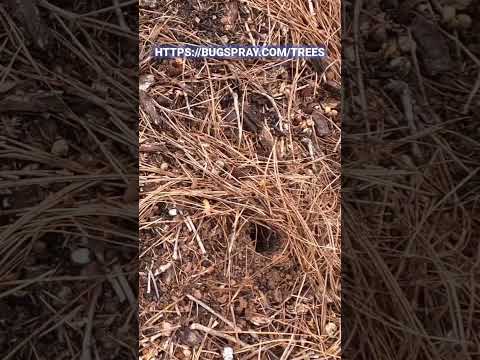
These holes in the ground can be made with a pick axe or any thin pipe like a 1/2″ piece of rebar. The holes should be large enough to contain the mixture as you pour it from your pail into the ground. In general, use 5-10 holes per 4-5 gallons of mixed solution.
Prothor should be applied once a year to infested trees but you can also drench nearby trees to ensure they don’t develop the problem too. Keep in mind this treatment will protect the tree from all kinds of boring pests as well as foliage eating insects like caterpillar, aphids and whiteflies too.


SPRAY TREE TRUNKS WITH MAXTHOR TO REPEL BEETLES
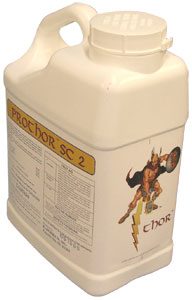
Prothor will take 3-6 weeks to “grow” into the tree so for immediate relief and to protect other trees from getting infested, spray MAXTHOR EC at the rate of 2 oz per gallon. This active is highly repellent to boring pests and treatments can last 2-3 months. For this reason its a good exterior spray for all the limbs and trunks of any tree Asian Longhorns might target. Trees sprayed on a regular basis will be repelling this borer along with many other pests which can help to stave off a range of related problems.
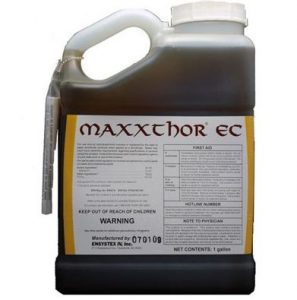
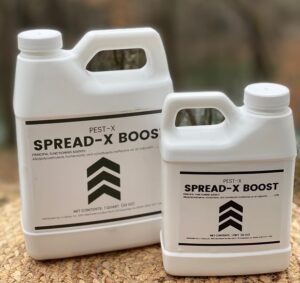
To get the most of your treatment, add SPREAD-X BOOST to your tank mix along with the Maxxthor. Boost is an adjuvant, also known as a wetter spreader or spreader sticker. It basically makes water and the mixture more “slippery” so you get better coverage. Treatments will spread 2-3 times wider and penetrate deeper. This is super important when spraying trees. Boost will help the Maxxthor get “into” the bark that much deeper and as a result, residuals will be longer and the immediate impact your treatment will be magnified.
The following short video summarizes why Boost can help deliver your treatment better.
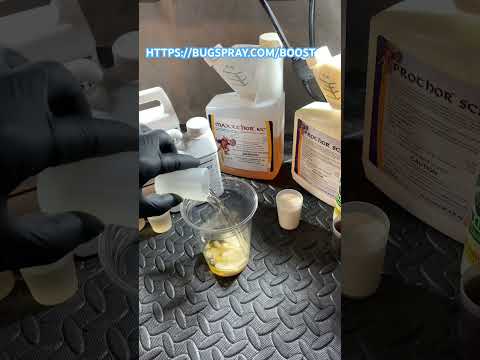
Add no more than the rate you’re applying the Maxxthor so in this case, if you’re adding 2.5 oz of Maxxthor to the hose end sprayer, add 2.5 oz of Boost too before adding water. If you’re adding Maxxthor to a pump sprayer at the rate of 1 oz per gallon, use 1 oz of Boost.
And don’t forget to add Boost to your soil drenches with the Prothor. Boost and Prothor, as well as Joy Juice, are all compatible and the Boost will get the treatment at least twice as deep. This insures the actives will be “in” the tree that much faster with Boost speeding up the time it takes to get the actives to the roots for absorption.
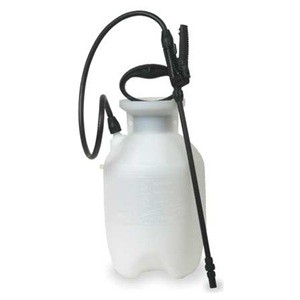
Use a good PUMP SPRAYER to make the application and make sure you spray at least 15 feet up.
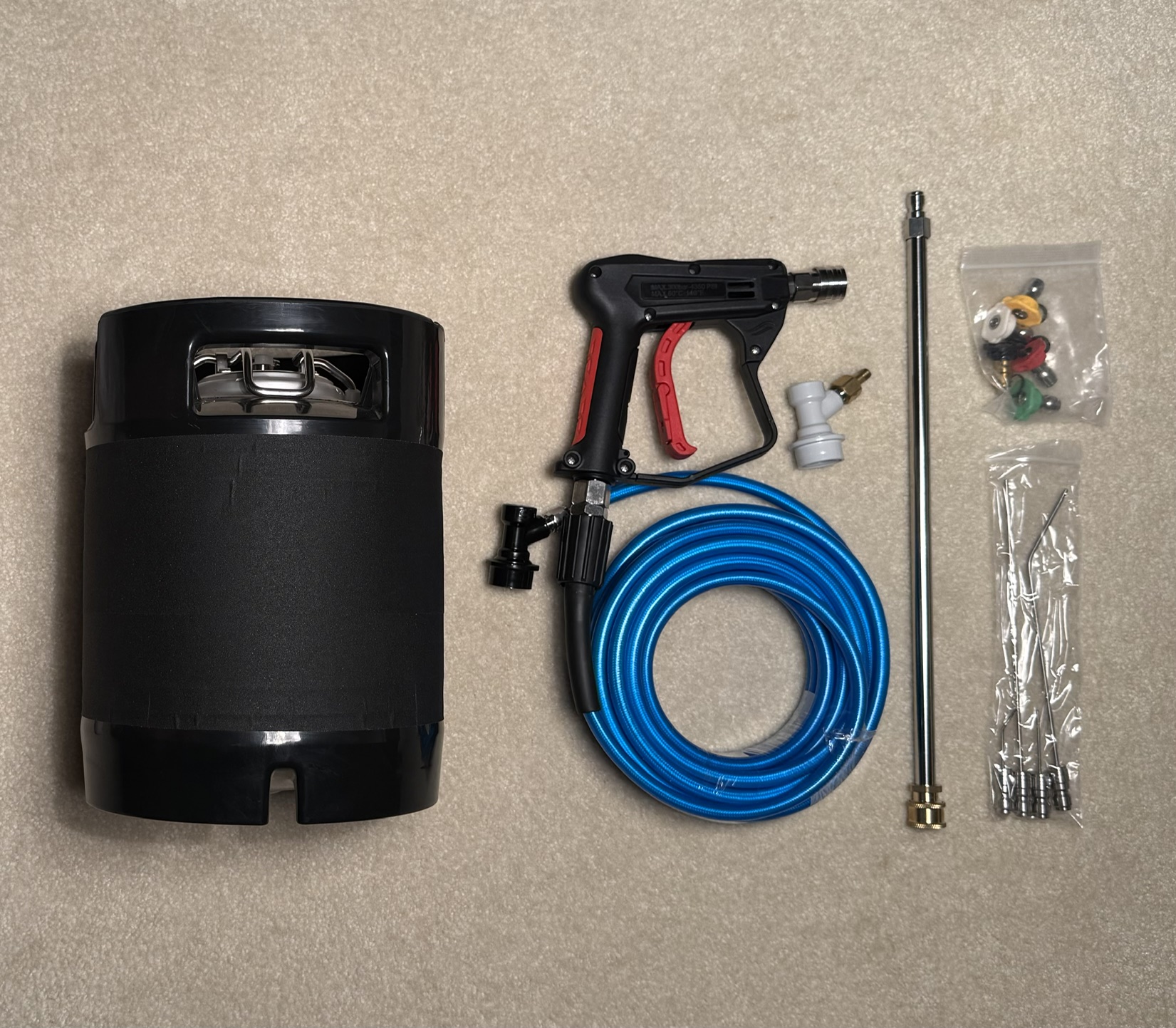
If you need to reach up 30-35 feet or more, our SKY-HY NO PUMP can be a big time. It relies on air pressure and can be pumped up to 80-90 psi safely.
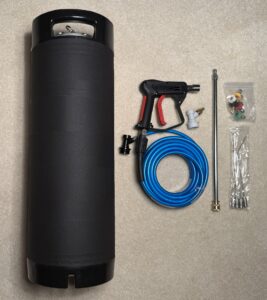
We offer them in three sizes, a 1.75 GALLON, 3.0 GALLON and 5.0 GALLON.
The Sky Hy does many things that can make treating your trees a lot easier. Here are some of it’s features.
First, it doesn’t need to be pumped. Using any tire pump or air compressor, you can safely pressurize it up to 80-90 PSI so it can empty itself with a steady flow that reaches up over 30 feet.
Second, it comes with a 12 foot hose so you can leave the tank on the ground while you walk around spraying. And if you need more reach, you can safely scale a ladder holding just the spray wand. With a 10 foot ladder, you’ll be able to spray up over 40 feet.
We also offer it with a 25 foot hose so if you have a 20 foot ladder, you can reach up over 50 feet!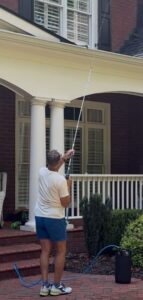
The Sky Hy comes with 5 nozzles that snap on and off the spray valve using a simple quick connect.
Also included are 4 Steel Injection Needles. These can be used to Power Inject any borer holes along with all cracks and crevices in the bark where beetles are likely thriving. If you have any holes, inject them. And if you’re finding sawdust, peel back the bark a bit to blast it with Maxxthor using one of these injectors. Power Injecting the Maxxthor will result in immediate results with no chance of feeding larvae to escape.
We have other features available including a 90″ STEEL LANCE.
Visit the Sky-Hy Product page to see more details and larger tank options if need something more than the 1.75 Gallon Kit:
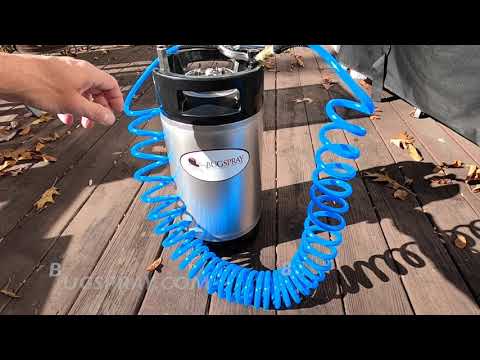
WATCH THIS VIDEO ON THE “NO PUMP” SPRAYER FOR OPERATIONAL DETAILS
TREAT BEHIND BARK AND BEETLE EXIT HOLES WITH FS MP AEROSOL
Since emerging adults are looking for mates and place to lay eggs, infested trees are prime locations they’ll use. Inspect the bark of you trees to see if adults are roosting behind layered bark. Certain species like pine trees will have plenty of gaps and crevices for adults to hide and the liquid treatments will often times miss key spots.
The following short video shows how to use FS MP for bark injection.

To ensure these aren’t harboring borers, spray with FS MP AEROSOL. This oil based spray is fast acting and penetrating so its good to inject any holes you find too.
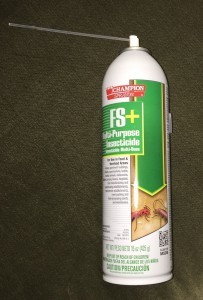
Spot treat as needed throughout the season and if you find any “pockets” of borers when spraying, you may want to do another liquid treatment with Maxxthor.
Davis says
These were very good details for my science report.