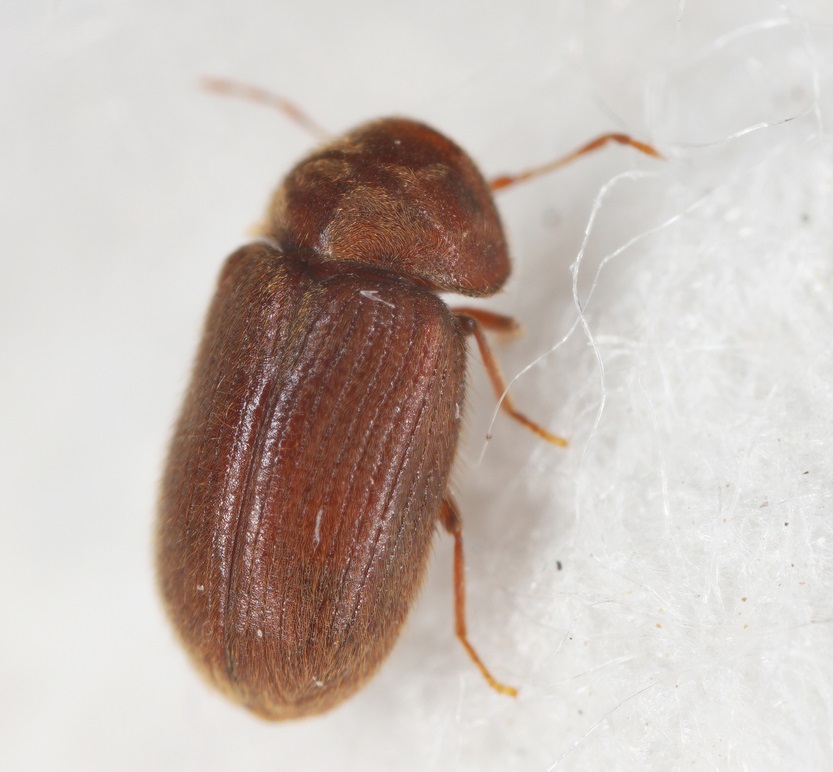
 We have been battling with drugstore beetles for few months already. We have brought in exterminators but these are mainly located in our wooden hardwood floors (as we have gaps in the hardwood floor and some small holes). He thinks they could be some kind of wood worm or powderpost beetle? We are losing our mind. Please help us.
So for sure, you could have either but the evidence strongly suggests powderpost beetles. Drugstore beetles actually look a lot like Powder Post Beetles, at least one type. And if they’re coming from gaps in your hardwood floors, then there is a chance it could be the drugstore too because they have been known to like that space. But it’s not likely they’d all be coming from there. And if you’ve seen any emerge or enter the smaller holes you mentioned, especially those on the top of the planks, it’s more likely a wood destroying beetle.
There should be some clear evidence to confirm one or the other and maybe the pest service didn’t provide any details. But if you watch carefully, here are a few things you can look for that could be a clear indication you have some kind of “wood eater”.
The first is to see if you find any fine “powder” in the gaps or in any of tiny “holes” on the top side of the flooring. Powderpost beetle larvae actually eat wood and then pupate to become beetles like you see in the pictures below. When the adult stage “leaves” the wood they chew through the edge (usually the top where we walk) and emerge. This typically produces a talc like powder that’s easy to notice – whether they’re chewing through wood or the material used to seal the exit hole which is also made mostly of wood.
And so if your have hardwoods, like oak, hickory, ash, etc., the “true” powderpost beetles known as lyctid’s, will tend to stay focused on where they’re active. This means adults which emerge will look for a mate and gravid females will try to reuse these same areas. They’ll track old holes by scent and so the issue could linger if left untreated and you would expect to be finding beetles roaming around in these same areas.
On the other hand, “false powderpost beetles” are more likely to leave the infested wood, find a mate and lay eggs elsewhere. And if you don’t have the same wood readily available, you’ll probably be finding them dead around lights, windows or on the floor by baseboards. These are technically named Bostrichid beetles.
But in both cases, the adults emerging will be creating a fine powder, much like talc powder, and this would be a sure sign.
There are other wood borers, like the Old House Borer and the Furniture beetle, and they too could be the problem.
In this next picture, you can see tiny holes on the top of oak flooring that were just created. This powder appears to be a bit coarse for the true powerpost beetle and so it’s most likely been created by the furniture species.
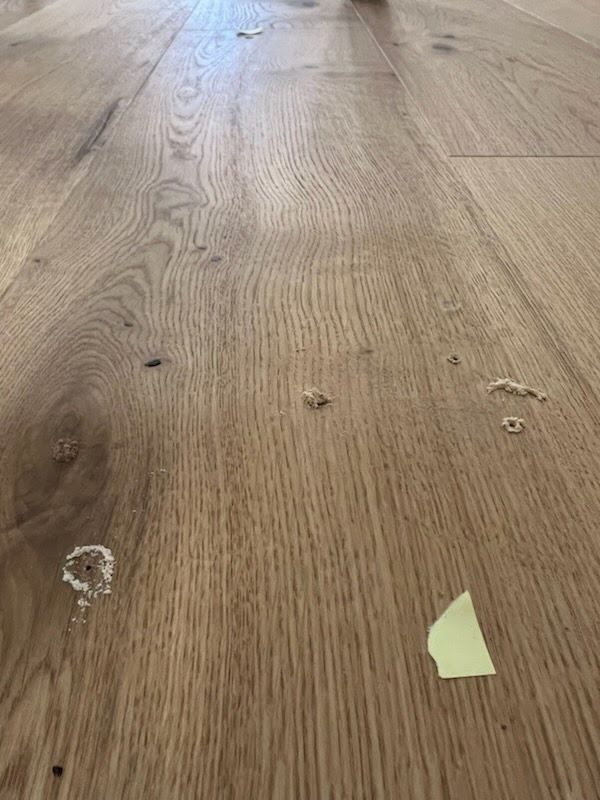
To be clear, these holes are very tiny. And both the developing larvae and adult powderpost beetles that might occupy this space would be quite small. To understand how small, check this picture showing an exit hole that has been “resealed”.
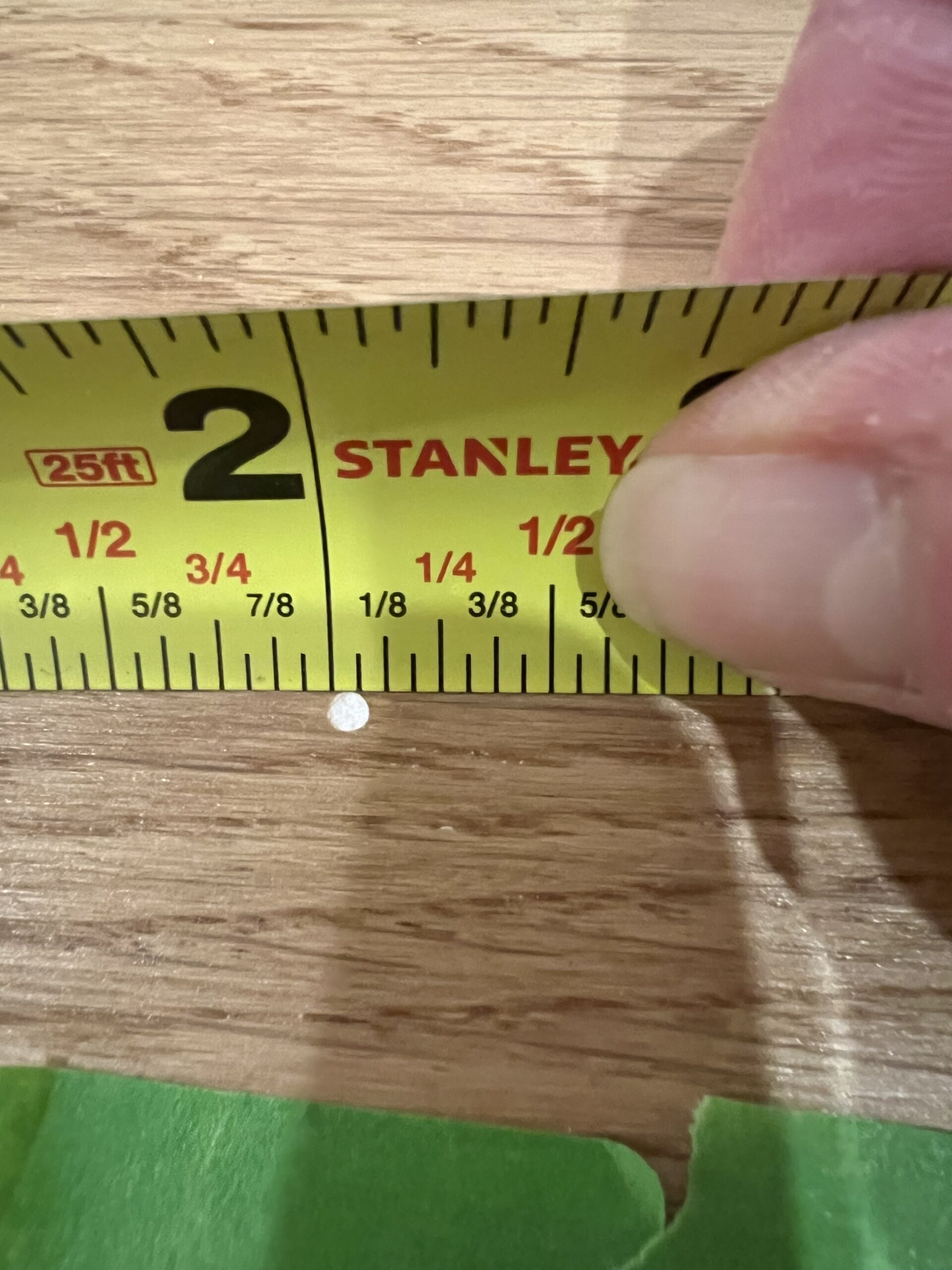
As you can see, these holes can be quite small and so easy to miss.
That same floor had active beetles and this rare video shows the larvae cleaning out it’s tunnels and galleries. Its most likely about to pupate and will seal the hole for the adult beetle to use when it’s ready to emerge and look for a mate.

Another sign to look for are dead carcasses. Most powderpost beetles are attracted to light and so once they come out in the open, they’ll either crawl or fly to lights in the evening or certain windows during the day.
The Lyctids and Bostrichids are good flyers; the Furniture beetle not so much so more likely to be found crawling around and likely to end up along baseboards.
The good news is most all will end up dying but there is always a risk some will find a good place to start anew. And so if you’re finding any of these in the home along with exit holes in the wood as we’ve described, it would indicate some kind of powderpost beetle and at the very least, an alternate plan of treatments.
That said, wood beetle issues can be resolved with the right chemical and equipment. You’ll need special agents designed to penetrate wood so it can reach all feeding stages and in some cases, special tools. But we have what you need and if you’re a “do-it-yourselfer”, this would be a task easy to tackle – even in wood floors.
And though replacing the infected wood might seem like the easy the path, there are things to consider. The big issue is that you don’t know the extend of the current issue and so do you just wait for evidence and replace planks one at a time? That’s not suggested.
And replacing the entire floor is costly, very messy and the new wood could very well be infested too. But if you choose that path, just be sure to get it treated as explain below.
So how do you treat a wood floor with wood beetles?
First, look for gaps. Any consistent pattern of small spaces like the ones you can see below can be used to treat.

So for a limited amount of holes, say 5-10 in a small area, you could focus on that one room and hope it’s a limited issue.
But in general, we recommend all flooring to be treated just to be sure. Since it doesn’t have to be done all at one time, you could choose to treat one room at a time, over several days or weeks. Powderpost beetles don’t feed quickly so if it takes 2-4 weeks to get the area treated, that won’t matter in the big picture.
And the best way to do the application is using the POWER INJECTOR and our concentrate detailed below.
The Power Injector comes with long injection hose making it easy to treat any gap, space, under baseboards and into exit holes. Plan on using BASE OIL and MAXXTHOR as explained below. But if you have unfinished sill plate, floor joists or large gaps in the flooring, you can even use a small paintbrush or pump sprayer.
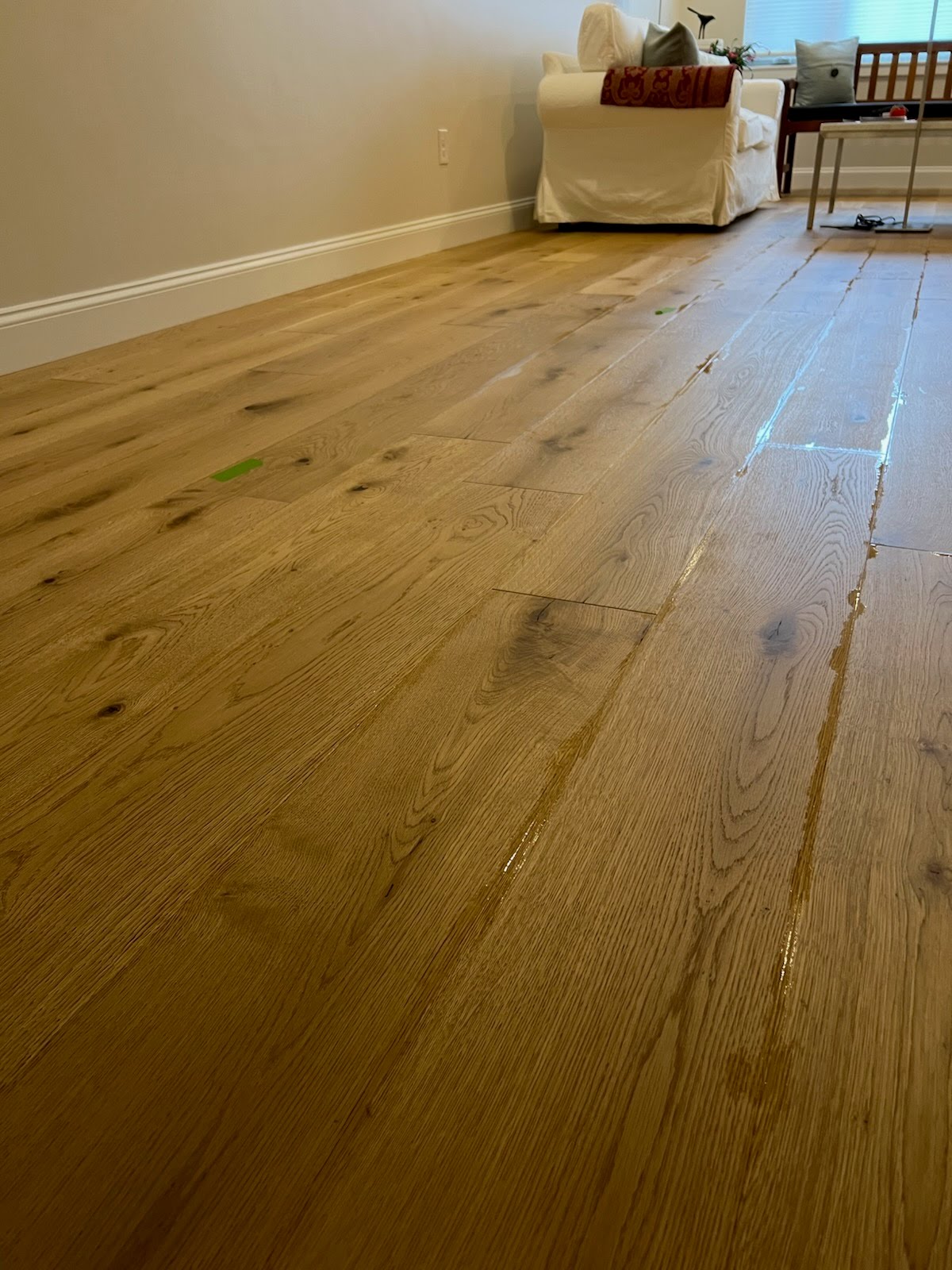
Here is a picture of floor with relatively “tight” gaps that received a treatment. Base oil was used and what you see in the picture will mostly soak in within an hour. Any left over will be easy to wipe up using a paper towel and it will not damage the finish.
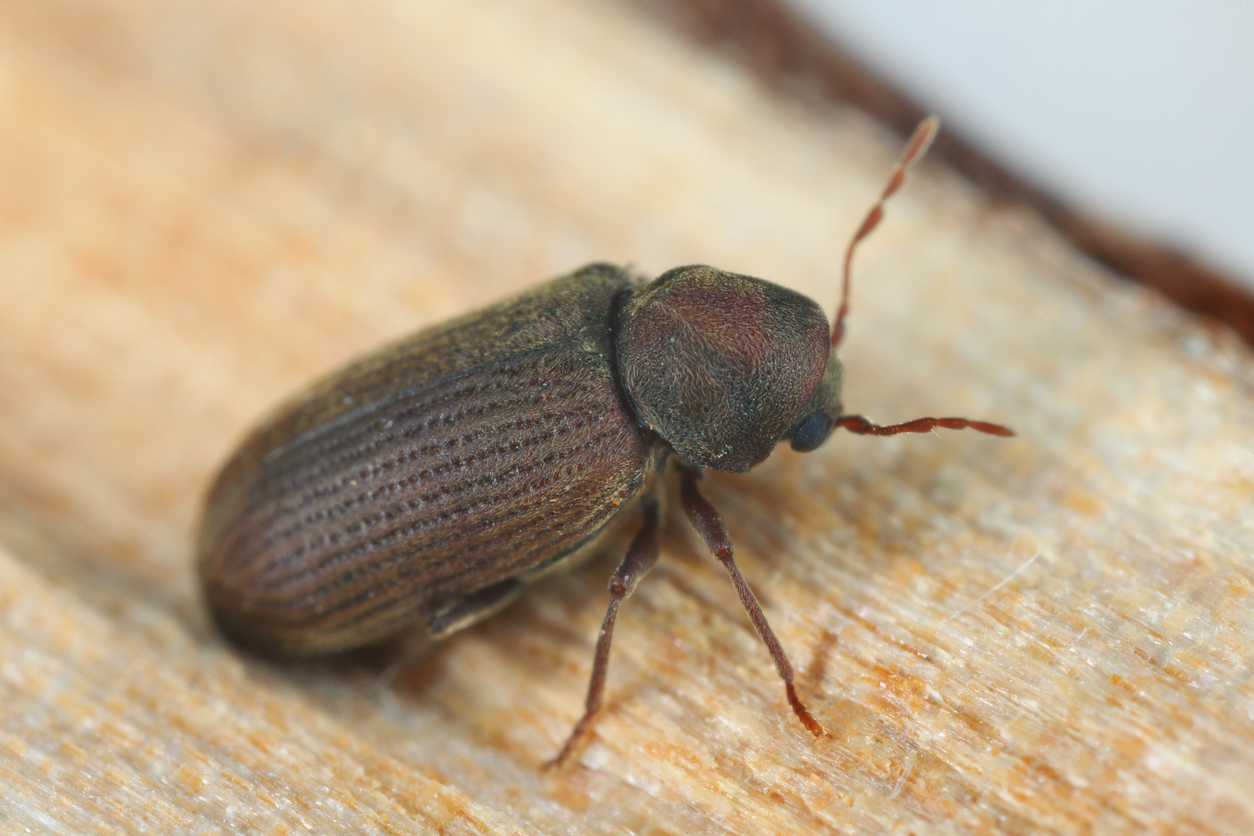
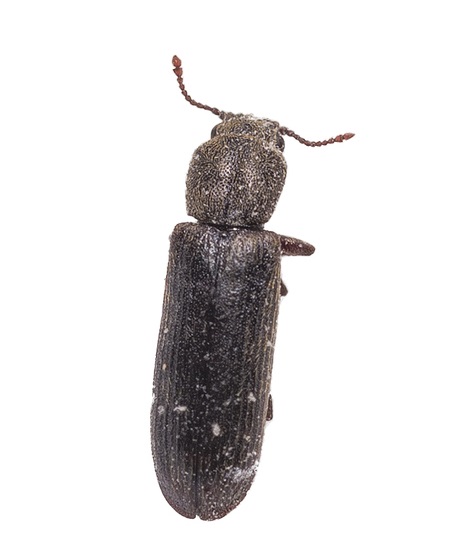
Now if you look at the picture to the left and below to the right, you can see two types of wood beetles. And so true, DRUGSTORE BEETLES do look like the one to the left. But they would most likely be found in pantries, cabinets and other areas where food or something is stored – not in hardwood floors.
But WOOD BORERS thrive in flooring and under baseboards and after the larvae get their fill, they’ll pupate and emerge and so they could very well be what you’re seeing.
Plus wood borers could be thriving in the sub flooring located under the hardwoods as well which would lead to them having to emerge where you’ve seen them.
As mentioned above, the best plan of attack will be using the POWER INJECTOR filled with a mixture of MAXXTHOR EC and BASE OIL.
You’ll need the base oil because when mixed with water alone, there won’t be sufficient penetration.
Now again, if you have plenty of big gaps in the flooring, you could use a thin pain brush and effectively “paint” the Maxxthor/Base Oil on and get very good results too. Base oil will soak in rapidly and this method would insure enough leaks down and outwards into the flooring as well as moving through any sub-flooring if the hardwoods have been installed over a basement or crawl space.
To learn more about the products you’ll need to treat, click on the links below to learn more about each item and place your order.
To learn more about the Power Injector, visit this page:

To learn more about Maxxthor, visit here:

To learn more about Base Oil, visit here:

REVIEWS & QUESTIONS