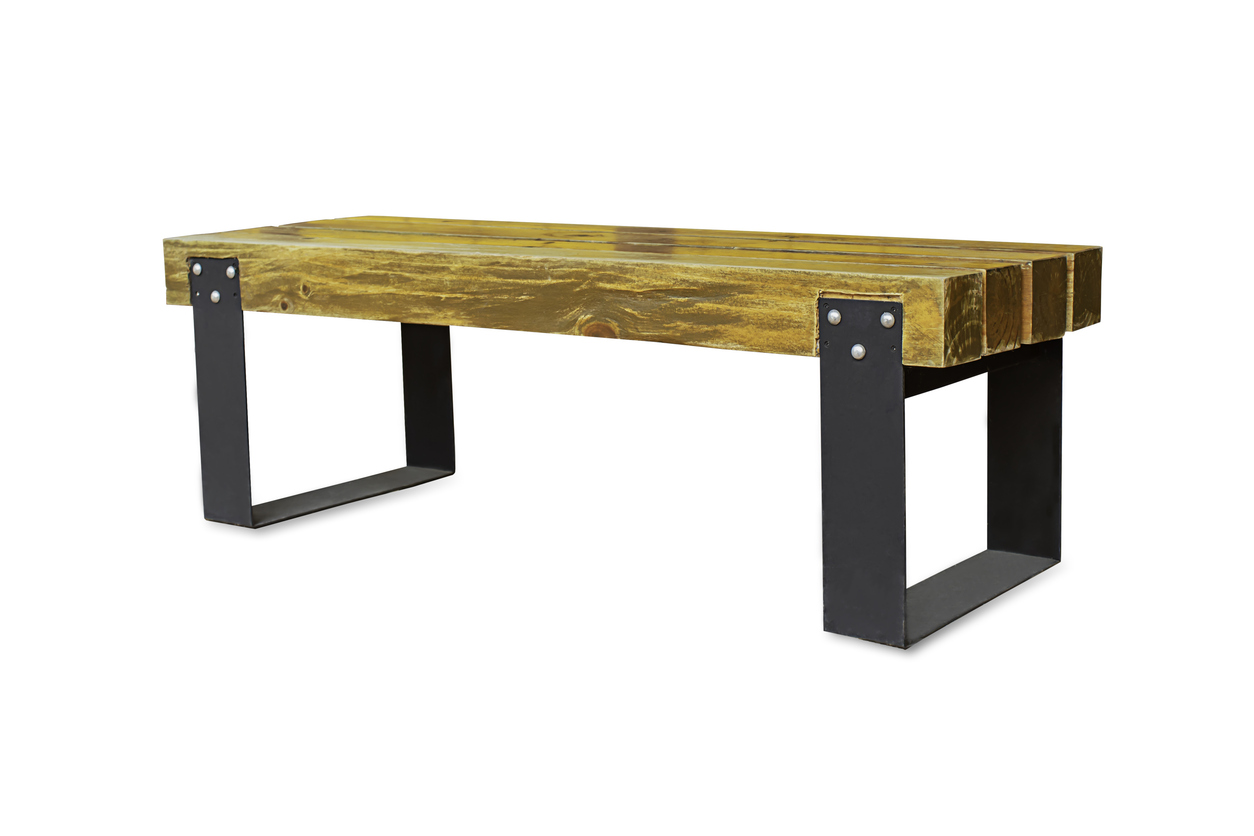
 We have been a customer in the past. We have benches that were made out of thick (2″ to 3″) lumber cut from a very large downed butternut tree in our yard. The lumber was drying in our barn for 2-1/2 years. The benches consist of slabs of wood for the bench and the back with steel legs. Pretty basic. The wood has been treated with an oil-based water repellent sealer. We just noticed powder post beetle dust on one of the pieces. What product do you recommend to treat the beetles?
So first, it’s important to understand the “dust” you’re finding is caused by adult beetles exiting the wood. This means you had active beetles for some time, actively feeding inside the bench wood, since they were built (and most likely since it was harvested). The average time it takes for them to fully develop is about 2-4 years though some species can take 10-12 years. Once the young get their full, they’ll spin cocoons and pupate eventually emerging as adults. This is when they chew their way out of the wood and leave their “dust”. More on this cycle can be learned about in our article here:
Now is this the only wave of activity meaning is this all that will ever emerge? Most likely no. In other words, it’s highly likely (greater than 90% chance) that more are still developing.
That said, you have applied a water “repellent/sealer”. This could impede and most likely effectively stop a topical treatment with a water based product that absorbs when applied to unfinished wood. That treatment is done with a product we call Borathor and you can learn more about it here:
Some key points about Borathor that are relative to your situation.. First, it won’t kill pupae so it only affects the developing young/larvae that are eating the treated wood. Second, it won’t penetrate through a water repeller or sealer so most likely NOT an option for the benches. But if you have more unused butternut wood, Borathor could be used to both kill and prevent wood borers from infecting it.
Now back to your benches; what treatment option can now be employed?
As our online article (link above) explains, fumigation is an option. But its very costly. Typically several thousand dollars. And it doesn’t provide any residual which means the wood is subject to future issues.
That leaves Power Injection.
This is when you apply a solution using the exit holes you find along with any holes you are willing to drill. In general, the more holes you can access, the more thorough the treatment will b. More on that below.
First, understand the best treatment option will involve a carrier we sell called Base Oil. Created to be used as a solvent for mixtures commonly used in food prep environments, Base Oil will penetrate through wood when injected via our Power Injector. Base oil is aggressive; it will penetrate many inches through one small hole 1/8″ wide. As stated above, exit holes will readily accept treatments too and even if they won’t take a lot of liquid all at once, you can revisit them many times to get deeper penetration. And when applied properly, it will fully disappear into the wood as our online video shows.
Making multiple applications will create a larger saturation coefficient which means the treatment will spread wider.
This process, power injecting, is actually easy BUT you will have to make a decision or two about how extensive of an areas you want to treat and which mixture you’ll want to use.
Some things to consider..
For starters, it’s not possible to know how many beetles are actually living in the wood right now. So if you have 5-10 holes, is it possible that’s all you had in the wood? Yes. But as previously stated, there is likely more developing and since there is no way to “look” deep inside the wood, it’s safe to assume this to be case. Typically they’ll be very close to the ones that have exited meaning they tend to live alongside one another even though they are solitary. For this reason, only treating the existing holes is a viable option (since the application will spread0. Also, with the wood in the 2-3″ thick range, you should be able to get decent coverage from one side to another – even if the hole is alongside one edge and not centered.
All that said, would it be wise to drill more holes and treat as much of the wood as possible? 100% yes. All of the options listed below (mixture options) will kill all stages when Base Oil is the carrier. This means if you are thorough, you can theoretically purge the wood from any and all insects that might be living in it.
Now onto the mixture options.
We have 3 that can be considered.
The first is Base Oil with Cottonseed Oil as the active. This would kill all stages but not provide any residual. It’s what we consider to be our “green” non-toxic option as it won’t pose any hazard since there is no residual.
The next option still uses all natural ingredients, kill all stages but it will still provide a good residual. This is generally what most people like to use with Base Oil especially for use inside – whether they’re injecting furniture, wall voids, etc. It has a slight odor, like Thyme and Wintergreen, but that can be minimized by adding T.O.N. to the tank mix.
Lastly, the strongest option is Maxxthor EC. It’s generally used outside as a surface spray but it can be used for injection when targeting wood destroying pests in wall voids, attics or crawl spaces. That said, we do NOT recommend using it for any free standing piece – especially if people will be contacting the bench – so if this “bench” is being used by people sitting on it, stick with one of the options listed above. But if the bench is a piece for show, not in use and something valuable you would like to preserve that will not be in contact with people sitting on it, this treatment could be considered.
These options should be applied using our Power Injector with low pressure (in the 15 lb or less range).
Tech Support
Team Bugspray.com
Leave a Reply